
From Prototype to Production
Sheet Metal Fabrication
A faster, easier way to get consistent, robust sheet-metal parts. From quick prototypes to scalable production, KaiSpeed delivers precision cutting, bending, welding, and finishing—on spec, on time.
All uploads are secure and confidential
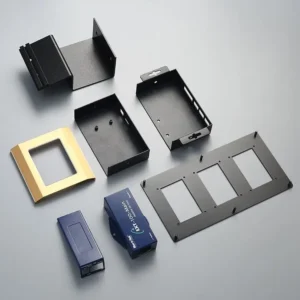
Sheet Metal Fabrication Services
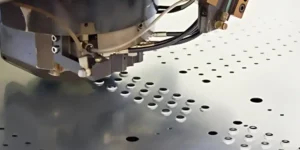
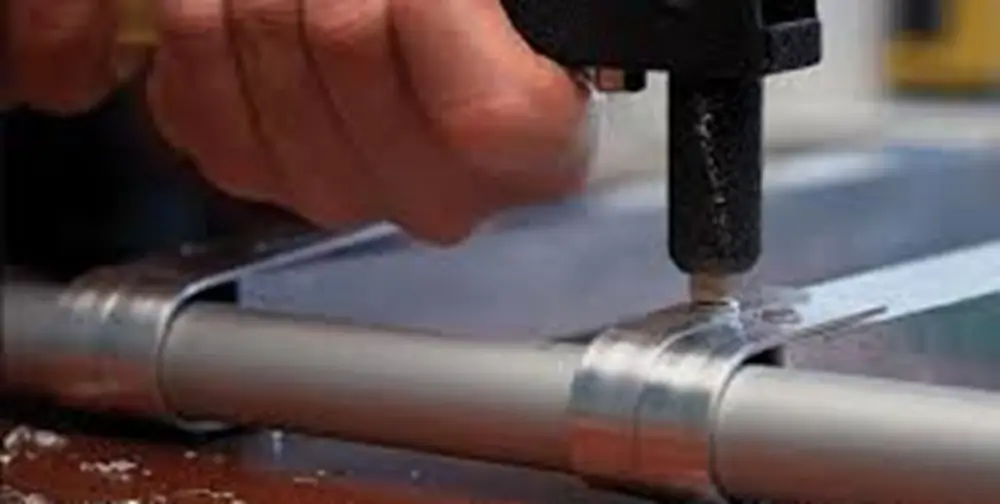
Riveting
Cost-effective joining with rivets and PEM® self-clinching hardware (nuts, studs, standoffs).
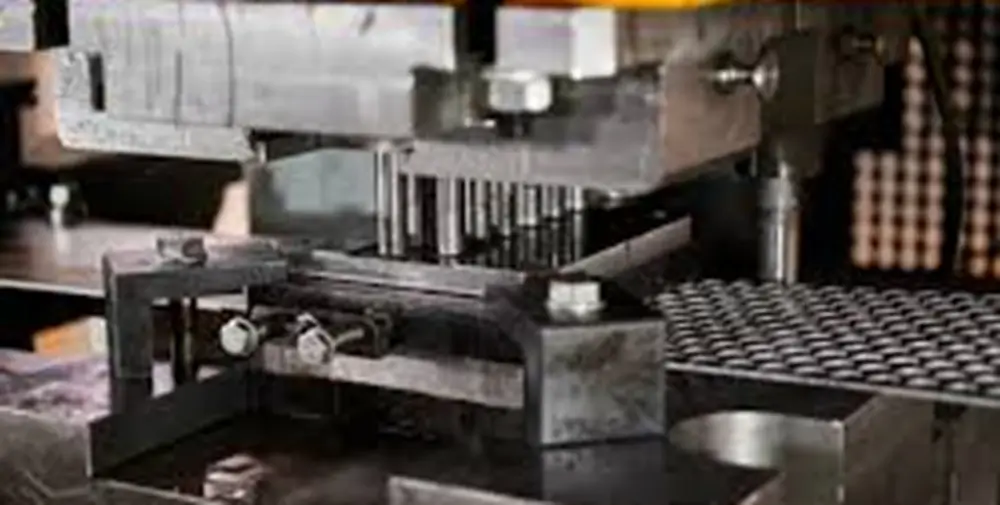
Stamping
Using dies and presses to blank, pierce, form, coin, emboss, and deep-draw sheet into precise 3D shapes.
Why KaiSpeed
- Engineer-led DFM: Early manufacturability feedback to protect tolerance stack-ups, surface quality, and cost.
High complexity, high mix: Thin-walls, deep pockets, micro-features, compound angles—done right.
Quality you can prove: FAIR, in-process checks, CMM reports, material certs (on request).
Secure & responsive: NDA welcome, transparent comms, proactive risk mitigation.
Scalable supply: From one-offs to steady production with consistent process controls.
24/7 Support • Fast Global Delivery • Secure NDA Protection
How to Work With Us
01. Upload Your CAD
Choose your process (CNC, sheet metal, injection molding, 3D printing, etc.) and upload your files.
NDA-backed confidentiality
Secure transfer (STEP/IGES/ PDF)
02. Get Quote & DFM
Select material, finish, and quantity. Receive a clear quote plus DFM feedback to optimize cost, lead time, and quality.
Typical within 24 hours
Alternative process/ material options when helpful
03. We Start Production
Once approved, we begin manufacturing to your drawing and GD&T requirements.
In-process QC and FAI on request
Photo updates and milestone reports
04. Receive Your Parts
After final inspection, we pack and ship to your door.
Dimensional/CMM reports available
Global shipping (NA/EU often 3–10 days)
Sheet Metal Materials

Aluminum Alloys
Lightweight, corrosion-resistant, and excellent strength-to-weight—ideal for enclosures, brackets, chassis, and heat-sensitive assemblies. Good formability (grade-dependent) and fast to machine.
Common grades: 5052-H32 · 5083 · 6061-T6
Best for: Aerospace/automotive panels, electronics housings, battery/robotics covers
DFM notes: 5052 bends cleanly; 6061 is stronger but needs larger min bend radius ≈ 1–1.5× t to avoid cracking
Finishes: Anodize (Type II/III), chromate (Alodine), powder coat, bead-blast + dye

Stainless Steel
Strong, hygienic, and corrosion-resistant with good cosmetics; great for medical, food equipment, and marine environments.
Common grades: SUS 304 (304/1.4301) · 316L (on request for higher corrosion resistance)
Best for: Enclosures in harsh/corrosive settings, medical housings, food-contact parts
DFM notes: Higher springback—plan larger bend radii (≥ 1–2× t); deburr for safe handling
Finishes: 2B/BA, brushed #4, bead-blast, passivation, electropolish, laser marking

Steel
High stiffness and durability with strong cost efficiency; broad gauges for structural panels and frames. Needs coating for corrosion protection (unless galvanized/e-coated).
Common grades: SPCC (CRS) · SGCC/SECC (galvanized/electro-galv) · Q235 · 1020
Best for: Chassis, racks, brackets, machine guards, HVAC panels
DFM notes: Account for coating stack-up (powder ~60–100 μm); maintain hole-to-edge ≥ 1× t
Finishes: Powder coat, e-coat, zinc/black oxide, phosphate + paint, silk-screen

Brass
Highly malleable, corrosion-resistant, and naturally “gold-like” in color; great for decorative trims plus functional hardware needing good machinability.
Common grades: C27400 · C28000 (Muntz) · C36000 (free-cutting)
Best for: Nameplates, bezels, aesthetic brackets, valves/fittings
DFM notes: Controls for grain direction on brushed faces; allow clearance for plating thickness
Finishes: Brushed/polished, clear coat, nickel/chrome plating, laser marking

Copper
Outstanding electrical/thermal conductivity with excellent ductility—suited to busbars, RF/EMI shields, terminals, heat spreaders.
Common grades: C101 (OFHC) · C102 (OF) · C110 (ETP) (CN equivalents like T2/TU1/TU2 available)
Best for: Electrical contacts, busbars, heat sinks/straps, shielding cans
DFM notes: Manage springback on formed features; avoid tight emboss near bends
Finishes: Tin/nickel/silver plating, passivation/anti-tarnish, conductive coatings
Surface Finishing Options
As-machined

Parts come straight off the CNC—deburr and edge break only—leaving visible tool paths for a fast, cost-effective finish (typ. ~Ra 3.2 µm)
Smooth / Fine Machining

Optimized tooling, feeds, and coolant to reduce tool marks. Commonly ~Ra 1.6 µm; with fine passes, ~Ra 0.8 µm is often achievable. Lower Ra may require polishing or grinding.
Polishing

Multi-step mechanical finishing that reduces roughness and delivers a uniform high-gloss metal surface (often ~Ra 0.8–0.2 µm); may remove slight material, so mask critical fits.
Brushing

Abrasive belts/brushes create a unidirectional satin look. Pair with passivation or coating to improve corrosion resistance.
Bead Blasting

Uniform matte texture that softens tool marks. Suitable for aluminum, stainless steel, steel, brass (plastics case-by-case).
Anodizing (Aluminum)

An electrochemical oxide layer that boosts corrosion resistance and surface hardness, with optional dyed colors for cosmetic appeal.
Powder Coating

Electrostatically applied dry powder, then cured. Tough, color-rich finish with excellent wear and corrosion resistance. Thicker film—factor into tolerances.
Black Oxide (Steel)

Conversion layer that reduces glare and offers light corrosion protection; typically used with oil/wax topcoat.
Electroless Nickel Plating

Autocatalytic nickel deposit—very uniform thickness (great for complex shapes/bores), improves wear and corrosion performance and appearance.
Chem-Film / Alodine

Thin conversion coating that provides corrosion resistance, maintains electrical conductivity, and works as a paint base. Common colors: clear or gold.
Electroplating

(Zn / Ni / Cr, etc.) Enhanced corrosion protection, hardness, and cosmetics. Specify plating type, thickness, and appearance class; copper strike/activation may be used on certain substrates.
Passivation

Removes free iron to restore/enhance stainless corrosion resistance. Recommended after machining and blasting.
Sheet Metal Fabrication with KaiSpeed
| Description | Thickness | Cutting Area | |
|---|---|---|---|
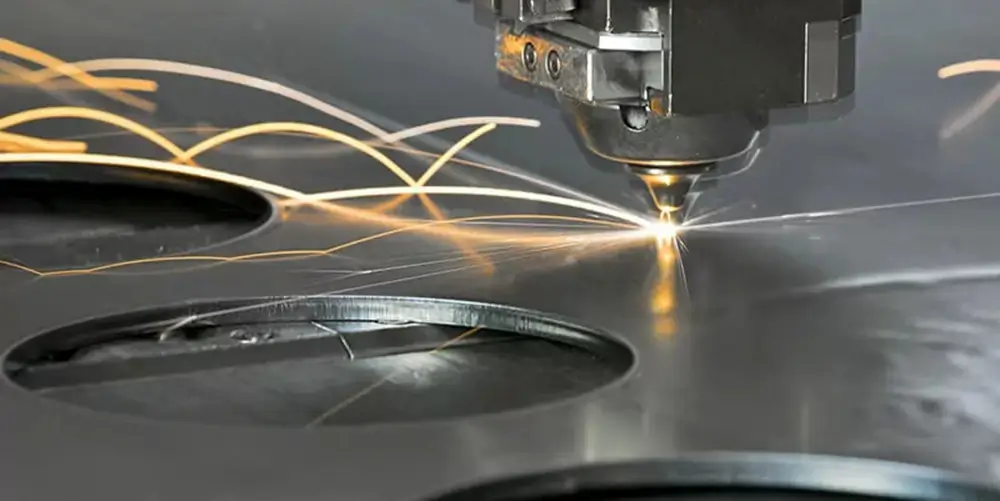
| Laser Cutting | Using high-power laser beams to cut metal materials can handle large-scale cutting tasks. | Up to 50 mm | Up to 4000 x 6000 mm |
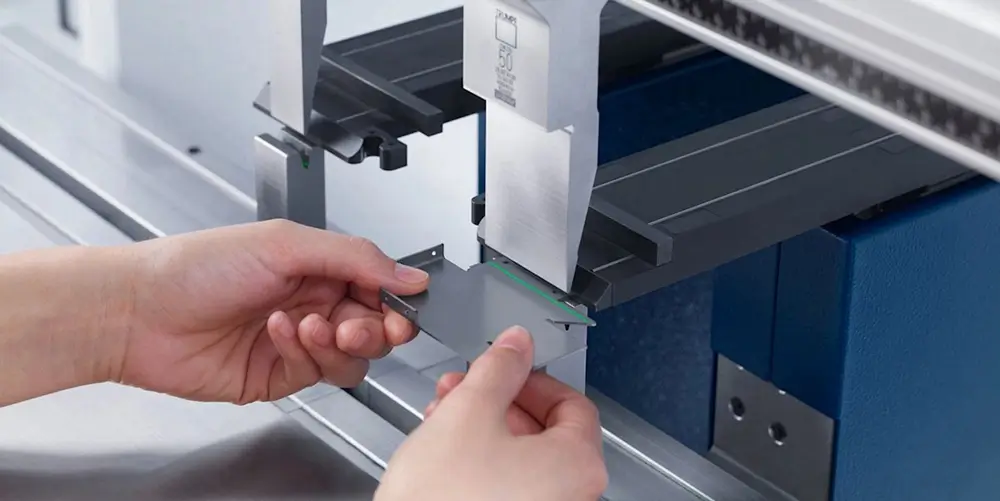
| Bending | Used to bend flat metal parts into the desired shape after the cutting process, typically used to shape custom sheet metal prototypes. | Up to 20 mm | Up to 4000 mm |
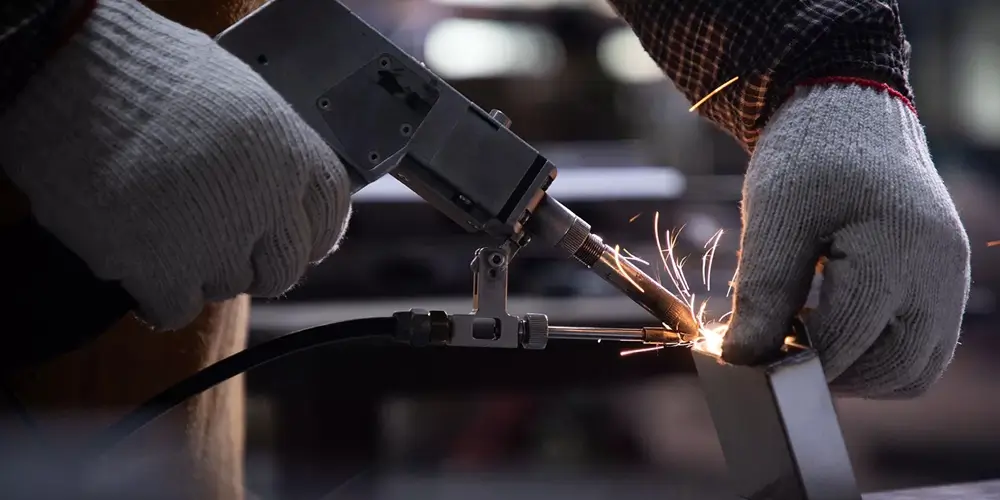
| Laser Welding | Accurately weld sheet metal parts together using a laser beam. | Up to 15 mm | Up to 4000 mm |
| Stamping | Cutting, bending, and forming metal parts through stamping molds. | Up to 6 mm | / |
Applications
Short lead times, high repeatability, and broad finish options make sheet metal ideal for both functional hardware and cosmetic assemblies.

- Enclosures & Casings – Protect electronics and machinery; add stiffness, thermal paths, and ingress protection.
- Brackets & Mounts – Precision supports for sensors, motors, and sub-assemblies.
- Panels & Chassis – Frames, rack panels, faceplates, and system backplanes.
- Ductwork & Ventilation – HVAC ducts, baffles, and battery cooling plenums.
- Racks, Shelving & Frames – Storage, machine guards, and structural frames.
- EMI/RFI Shields – Cans, covers, and gasketed doors for regulatory compliance.
- Battery & Power Housings – BMS covers, inverter enclosures, busbar covers.
- Bezels & Decorative Elements – Cosmetic trims, nameplates, and branded fascias.
- Prototypes & Test Fixtures – Rapid functional prototypes and jigs/fixtures.
Specialist Industries
FAQs
Sheet metal forming uses processes like bending, pressing, rolling, and drawing to plastically deform sheet stock into 3D shapes without removing material. The result is fast, repeatable parts with minimal waste.
Generally yes—more operations = more cost (e.g., cut + bend + punch costs more than cut only). That said, many sheet-metal parts require a combination of processes; with good DFM, the total cost increase is often modest.
It’s fast, economical, and versatile. You get high strength-to-weight, good cosmetics/finishes, and scalable throughput—ideal for electronics, automotive/EV, construction, energy, robotics, and more.
Yes. Our engineers provide DFM feedback on bend radii, K-factor, hole-to-edge distances, reliefs, grain direction, finish stack-ups, and hardware keep-outs—so your parts build right the first time.
Cost drivers include material & thickness, number of ops (cut/bend/punch/weld), tolerances & GD&T, finishes, hardware/assembly, and volume. Some cases add tooling/NRE (e.g., custom fixtures, screens). Share final CAD + drawing for the most accurate quote.
No strict MOQ. We support everything from one-off prototypes to mass production. Pricing improves with volume and part standardization.
K-factor locates the neutral axis during bending and determines bend allowance for flat patterns. Typical starting range 0.30–0.45 (varies by alloy, thickness, tooling). We’ll validate in DFM/bending trials as needed.
Sheet is thinner and intended for formed parts (≈0.15–6 mm typical).
Plate is thicker (≥~6 mm) for structural uses and is more often machined than formed.
Anodizing (Type II/III), chromate/Alodine, powder coat, wet paint, passivation, zinc/nickel/tin plating, black oxide, bead-blast, brushing, silk-screen, laser marking—delivered fully assembled if required.