
Tolerance is one of the most critical—but often misunderstood—elements in CNC machining. For engineers, designers, and sourcing managers, specifying the right tolerance can mean the difference between a functional, cost-effective part and an over-engineered, expensive one.
In this CNC machining tolerance guide, KaiSpeed explains what tolerances really mean, how they impact manufacturability, and how engineers can balance precision, performance, and cost. Drawing from our experience in high-precision CNC machining for robotics, medical, aerospace, automotive, and electronics industries, this guide focuses on practical, production-ready insights—not textbook theory.
What Is Tolerance in CNC Machining?
In CNC machining, tolerance defines the allowable variation from a nominal (theoretical) dimension. Since no manufacturing process can achieve perfect accuracy, tolerances set acceptable limits for size, geometry, and location.
For example:
- Nominal diameter: 10.00 mm
- Tolerance: ±0.05 mm
- Acceptable range: 9.95 – 10.05 mm
If a part dimension falls outside this range, it is considered nonconforming.
Why Engineers Should Care About Tolerances
Tolerance decisions directly influence:
- Functionality – Fit, sealing, motion, and alignment depend on tolerance
- Manufacturing cost – Tighter tolerances require more time, tooling, and inspection
- Lead time – High-precision machining often involves slower feeds, multiple setups, and additional QC
- Yield & scrap rate – Overly tight tolerances increase rejection risk
At KaiSpeed, we often see designs where tolerances are tighter than functionally necessary. Optimizing tolerances early can reduce part cost by 20–50% without sacrificing performance.
Standard CNC Machining Tolerances
While exact tolerances depend on material, geometry, and process, the table below summarizes commonly accepted CNC machining tolerances.
| Feature Type | Standard Tolerance | Tight Tolerance (Capability-Based) |
|---|---|---|
| Linear dimensions | ±0.10 mm | ±0.01 mm to ±0.005 mm |
| Hole diameter | ±0.05 mm | ±0.01 mm |
| Shaft diameter | ±0.05 mm | ±0.01 mm |
| Flatness | 0.05 mm | 0.01 mm |
| Parallelism | 0.05 mm | 0.01 mm |
| Perpendicularity | 0.05 mm | 0.01 mm |
KaiSpeed capability note: With optimized tooling, temperature control, and inspection, we can achieve tolerances down to ±0.005 mm on selected features.
What Is Considered a Tight Tolerance in CNC Machining?
A tight tolerance is any requirement that significantly exceeds standard CNC capability and demands special process control.
Typical examples include:
- ±0.01 mm (0.0004 in): precision assemblies
- ±0.005 mm (0.0002 in): optics, medical, aerospace reference features
However, tight tolerance is not only about numbers. It also depends on:
- Feature size (±0.01 mm on a Ø2 mm hole is much harder than on Ø50 mm)
- Material stability
- Part geometry and wall thickness
- Datum strategy
At KaiSpeed, we always evaluate functional necessity before accepting ultra-tight tolerances.
CNC Machining Tolerances by Material
Material properties strongly influence achievable tolerance.
| Material | Machinability | Typical Tolerance |
| Aluminum (6061, 7075) | Excellent | ±0.01–0.05 mm |
| Stainless Steel (304, 316) | Medium | ±0.02–0.05 mm |
| Tool Steel | Medium–Hard | ±0.02–0.05 mm |
| Titanium | Challenging | ±0.02–0.05 mm |
| Brass | Excellent | ±0.01–0.03 mm |
| PEEK / Engineering Plastics | Medium | ±0.03–0.10 mm |
KaiSpeed insight: Plastics often require looser tolerances due to thermal expansion and stress relaxation after machining.
Fits and Tolerances: Clearance, Transition, and Interference
For mating parts, tolerance selection must consider fit type.
Common Fit Types
| Fit Type | Description | Typical Applications |
| Clearance Fit | Always leaves space | Sliding parts, bearings |
| Transition Fit | Small clearance or interference | Accurate alignment |
| Interference Fit | Always interference | Press-fit pins, bushings |
Proper fits rely on both shaft and hole tolerances, not a single dimension.
Geometric Dimensioning & Tolerancing (GD&T)
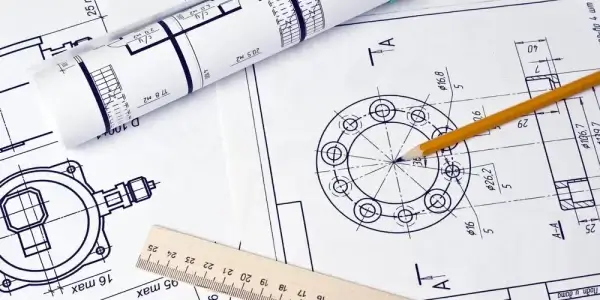
Beyond size tolerances, GD&T controls form, orientation, and position.
Common GD&T callouts:
- Flatness
- Parallelism
- Perpendicularity
- Position
- Concentricity
GD&T allows engineers to relax size tolerances while tightly controlling function-critical geometry. KaiSpeed strongly recommends GD&T for complex assemblies and precision motion components.
How Tolerances Affect CNC Machining Cost
Tighter tolerances increase cost due to:
- Slower cutting speeds
- Additional finishing passes
- Specialized tooling
- More inspection (CMM, optical measurement)
- Higher scrap risk
Cost vs Tolerance Relationship
| Tolerance Level | Relative Cost Impact |
| ±0.10 mm | Baseline |
| ±0.05 mm | +10–20% |
| ±0.02 mm | +30–50% |
| ±0.01 mm | +60–100% |
| ±0.005 mm | Project-specific |
KaiSpeed recommendation: Apply tight tolerances only to functional features, not the entire part.
Design Tips for Engineers: Tolerance Optimization
To reduce cost and improve manufacturability:
- Avoid blanket tolerances on drawings
- Use standard tolerances wherever possible
- Apply tight tolerances only to critical interfaces
- Use GD&T instead of tightening size tolerances
- Match tolerance to material behavior
- Communicate functional intent with your CNC supplier
Our engineers at KaiSpeed often assist customers with tolerance optimization reviews before production.
Inspection and Quality Control at KaiSpeed
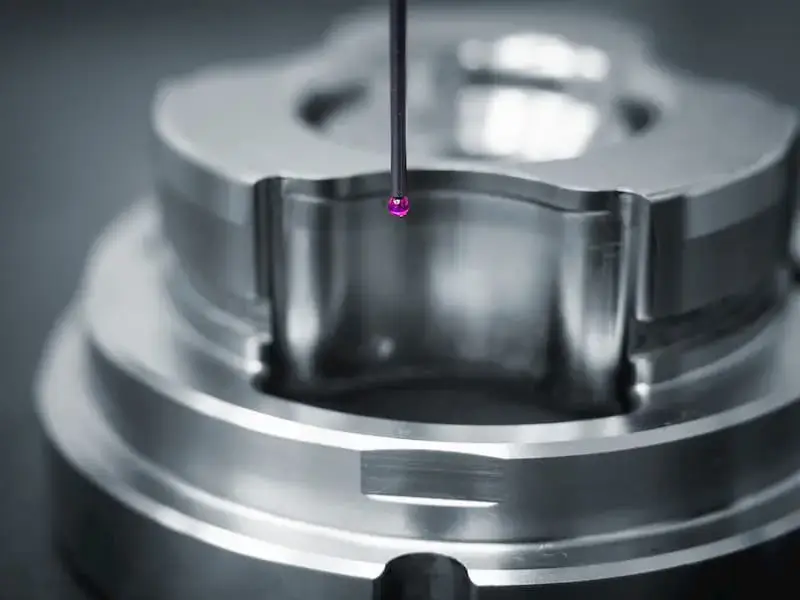
Tolerance is meaningless without verification. KaiSpeed applies a multi-layer QC system:
- First Article Inspection (FAI)
- In-process measurement
- CMM inspection for tight-tolerance features
- Dimensional reports on request
This ensures every precision CNC machined part meets drawing requirements.
Why Choose KaiSpeed for Tight-Tolerance CNC Machining?
- ISO 9001 certified quality system
- Tolerances down to ±0.005 mm
- Expertise in complex, high-precision parts
- Strong experience in robotics, medical, aerospace, and electronics
- Cost-optimized manufacturing from prototype to production
👉 Learn more about our CNC machining services at KaiSpeed
FAQ: CNC Machining Tolerances Engineers Often Ask
What is a standard tolerance for CNC machining?
For most CNC machined parts, a standard tolerance of ±0.05 mm to ±0.10 mm is widely accepted. At KaiSpeed, unless otherwise specified, we apply standard CNC machining tolerances suitable for both prototyping and low-to-mid volume production.
What is considered a tight tolerance in CNC machining?
Tolerances tighter than ±0.02 mm are generally considered tight. Requirements such as ±0.01 mm or ±0.005 mm typically demand special tooling, slower machining parameters, temperature control, and advanced inspection.
How tight is too tight for CNC machining?
A tolerance is “too tight” when it exceeds functional needs and significantly increases cost, lead time, or scrap risk without improving part performance. KaiSpeed engineers often help customers relax non-critical tolerances to reduce cost by 20–50%.
Does tighter tolerance increase CNC machining cost?
Yes. Tighter tolerances require more machining passes, specialized equipment, and additional inspection. The tighter the tolerance, the higher the cost per part—especially for complex geometries or difficult materials.
Can CNC machining achieve ±0.005 mm tolerance?
Yes, but only on selected features with appropriate design, material, and process control. KaiSpeed regularly achieves ±0.005 mm tolerance for high-precision applications in robotics, medical devices, and aerospace.
Should I apply the same tolerance to the entire part?
No. Blanket tolerances often lead to unnecessary cost. Best practice is to apply tight tolerances only to functional or assembly-critical features.
Why Engineers and Buyers Choose KaiSpeed
KaiSpeed is more than a CNC machining supplier—we act as a manufacturing partner.
- Free tolerance & DFM review before quoting
- Clear feedback on unrealistic or cost-driving tolerances
- ISO 9001 certified quality system
- Proven experience with tight-tolerance, complex geometries
- Scalable from prototype to production
👉 Learn more about our CNC machining services and how we support engineering teams from concept to production.
Conclusion: Tolerance Is a Design Decision, Not a Default
Tolerance is not just a number on a drawing—it is a strategic engineering decision that affects functionality, cost, quality, and delivery time.
By understanding CNC machining tolerances and working closely with an experienced partner like KaiSpeed, engineers can achieve the ideal balance between precision and manufacturability.
If you are unsure whether your tolerances are realistic or cost-effective, KaiSpeed is happy to review your drawings and provide expert feedback.
📩 Have a tight-tolerance CNC machining project?
Upload your drawings to KaiSpeed and receive:
- Free tolerance & manufacturability review
- Expert recommendations to reduce cost
- Fast, competitive CNC machining quotes
👉 Contact KaiSpeed today to start your precision CNC project with confidence.