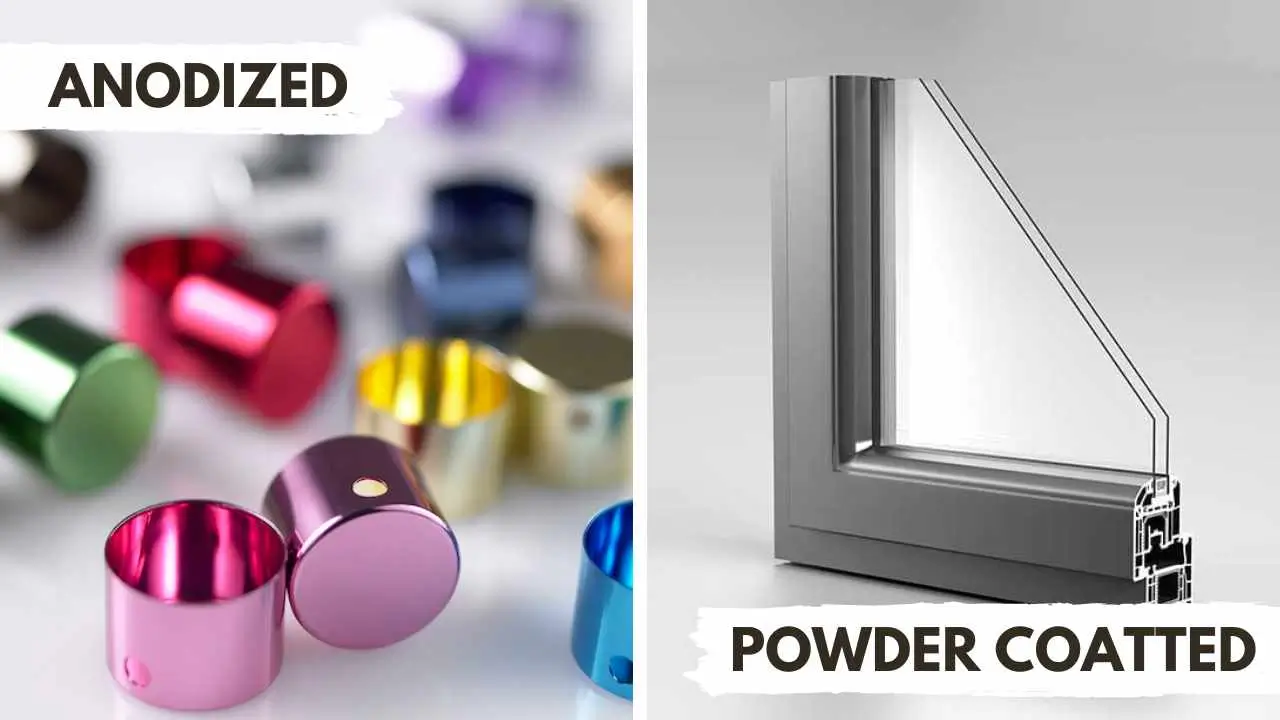
When your aluminum part is ready to ship, the finish you choose often determines how it will look—and how long it will last. Two of the most popular options are anodizing and powder coating. Both can improve corrosion resistance and appearance, but they behave very differently in real-world use.
So which is better?
The answer depends on what your part needs most: tight dimensional control, outdoor color durability, scratch resistance, electrical insulation, heat tolerance, or a premium metallic look. In this guide, we’ll compare anodizing vs powder coating with practical engineering criteria, so you can select the right finish for your aluminum parts.
Quick takeaway
- Choose anodizing when you need thin build, precise fits, heat tolerance, and a metallic finish that won’t peel.
- Choose powder coating when you need maximum color options, thicker impact protection, and strong outdoor appearance (UV/weather) with the right powder system.
What Is Anodizing?
Anodizing is an electrochemical process that transforms the aluminum surface into a controlled oxide layer. Instead of “adding paint,” anodizing grows protection into the metal surface, which is why it doesn’t flake or peel like a coating can.
Common anodizing types for aluminum:
- Type II (sulfuric anodize): Decorative + corrosion resistance; can be dyed many colors.
- Type III (hard anodize / hardcoat): Thicker, tougher, more abrasion-resistant; colors tend to be darker/more muted; can affect tight-fit features due to increased thickness.
What Is Powder Coating?
Powder coating is a finishing process where dry powder is electrostatically applied and then heat-cured into a continuous polymer film. It creates a thicker external shell that can resist chips and outdoor weathering, and it offers a wide range of color and texture options.
Because powder coating is a film sitting on top of the metal, surface prep and cure quality matter a lot for adhesion and long-term performance.
The Most Important Difference: Build Thickness
This is the make-or-break factor for many machined parts.
- Anodizing is thin and typically adds only microns of thickness—great for tight tolerances and precise fits.
- Powder coating is thicker, commonly around 2–4 mils (~50–100 μm range depending on system), which can require extra clearance on threads, press fits, sliding interfaces, and sealing features.
Practical rule:
If the part has precision mating features, anodizing is often safer. If the part is a housing, bracket, cover, or outdoor enclosure where thickness is less critical, powder coating may be ideal.
KaiSpeed Finish Tip (DFM): Plan Your Fits Before You Choose a Finish
If your part includes any of the items below, finishing choice can make or break assembly:
- Threads / tapped holes (risk of coating build and thread interference)
- Press fits / slip fits (bearing seats, dowel holes, precision bores)
- Sealing faces (O-ring grooves, gasket lands, vacuum grooves)
- Electrical contact points (grounding surfaces)
- Cosmetic surfaces (color matching, scratch sensitivity, visible tool marks)
What we recommend: call out “masking” on the drawing for critical features, and define which surfaces are cosmetic vs functional. It prevents rework and shortens lead time.
Anodizing vs Powder Coating: Side-by-Side Comparison
Best for tight fits & precision features: Anodizing
Best for bold colors & thick protective film: Powder coating
Key differences that matter in engineering decisions:
1) Durability & Wear
- Anodizing: Creates a hard, ceramic-like oxide surface; Type III hard anodize is chosen for higher wear environments.
- Powder coating: More flexible and impact-resistant; can resist chips well, but the surface itself is typically softer than hard anodize and can scratch depending on formulation.
2) Corrosion Behavior
- Anodizing: Integrated into the aluminum, so it won’t peel; scratches don’t cause “film lifting,” though deep damage can still expose base metal.
- Powder coating: Provides a barrier layer; if it chips deeply, moisture can reach the aluminum underneath and corrosion can start at exposed areas.
3) UV & Outdoor Appearance
- Anodizing: Naturally UV-stable and does not peel; color consistency can vary by alloy and process controls.
- Powder coating: Outdoor-rated systems are designed for weathering and color retention; architectural standards often target film thickness and durability levels.
4) Heat Tolerance
- Anodizing: Handles higher temperatures well due to the oxide layer’s ceramic nature.
- Powder coating: Polymer films can degrade at elevated temperatures (commonly less suitable for high-heat environments).
5) Cosmetic Look
- Anodizing: Premium metallic look; translucent dye options; bead blast or polish pretreatments strongly affect appearance.
- Powder coating: Huge variety—matte, gloss, texture, wrinkle, metallic effects; also hides minor surface imperfections well.
When Anodizing Is the Better Choice
Choose anodizing when your aluminum part needs:
Tight tolerances and precise interfaces
Because anodizing adds only microns, it’s ideal for:
- press-fit or slip-fit assemblies
- precision bores and bearing seats
- threaded parts where you want predictable fit
- parts with detailed engraving or fine features
Higher heat tolerance
If your part sees higher temperatures (near heat sources, electronics thermal zones, or industrial equipment), anodizing is often preferred over polymer coatings.
Metallic aesthetics
For premium consumer products, anodizing provides a “true metal” look that’s hard to replicate with paint-like coatings.
- “For cosmetic aluminum parts (like audio housings), see our case study: CNC Machining Custom Headphones.”
When Powder Coating Is the Better Choice
Choose powder coating when your part needs:
The widest color range and brand matching
Powder can be matched to many color systems (including common architectural color expectations) and supports special textures and finishes.
A thicker barrier layer for impact and handling
Powder coating’s thickness can protect against minor knocks and wear during shipping/installation—great for:
- outdoor enclosures
- industrial frames
- brackets, covers, panels, housings
- sheet metal assemblies
Outdoor weathering performance (with the right powder system)
Architectural powder systems often specify film thickness and performance expectations (commonly 2–4 mils in guides) to support durability goals.
The “Hidden” Engineering Issue: Masking & Critical Surfaces
In real production, most finishing problems don’t come from the finish itself—they come from missing notes on the drawing. Both anodizing and powder coating require masking, but for different reasons:
For anodizing (Type II / Type III)
- Anodizing grows an oxide layer. For tight assemblies, even small thickness changes can influence fit.
- For hard anodize (Type III), masking becomes even more important for precision bores, threads, bearing seats, and sealing faces.
For powder coating
- Powder coating is a thicker film. Without masking/clearance planning, it can block:
- threaded holes
- press-fit seats
- grounding points
- sealing surfaces
- sliding interfaces
KaiSpeed drawing note examples (copy/paste):
- “Mask all threads, bearing seats, and sealing faces. No coating allowed.”
- “Cosmetic surfaces: A-side only. Non-cosmetic surfaces: allow minor marks.”
- “Color: RAL _____. Gloss level: matte/satin/gloss.”
- “Outdoor use: specify UV-resistant powder system.”
How to Specify Anodizing or Powder Coating in Your RFQ (So You Get Consistent Results)
To quote accurately and avoid surprises, include these details with your CAD/drawing:
- Material & alloy (e.g., 6061-T6 / 6063 / 5052)
- Finish type
- Anodize Type II / Hard anodize Type III
- Powder coat indoor / outdoor grade
- Color requirement
- Anodize: black/clear/natural or dyed color
- Powder coat: RAL / Pantone reference (if applicable)
- Cosmetic standard
- Which surfaces are cosmetic (A-side), and acceptable mark level
- Masking list
- threads, sealing faces, bores, grounding points
- Functional environment
- indoor/outdoor, salt fog exposure, chemical contact, temperature range
- Quantity & target lead time
- prototype vs production changes the best finishing route
At KaiSpeed, we review these items during DFM so your finish is not only “nice looking,” but also assemblable and repeatable in production.
Which Finish Is More Cost-Effective?
Cost depends on:
- part size and quantity
- pretreatment requirements
- color/texture requirements
- masking complexity
- quality standard (architectural/outdoor vs indoor)
General tendencies:
- Anodizing is often cost-effective for machined aluminum parts where precision matters and masking is minimal.
- Powder coating can be cost-effective for larger surfaces and enclosures, especially when color matching and thick coverage matter.
If you’re unsure, the fastest path is to share:
- CAD + material/alloy
- target color (or RAL)
- environment (indoor/outdoor/chemical exposure)
- critical-to-quality features (CTQs)
Quick Selection Guide (KaiSpeed Rule of Thumb)
Choose anodizing if you need:
- minimal dimensional change for tight fits
- a true metallic look (premium consumer products)
- better performance near heat sources
- a finish that won’t peel
Choose powder coating if you need:
- the widest color + texture options
- thicker film for handling and minor impacts
- strong outdoor appearance with the right powder system
- better hiding of minor surface imperfections on large panels/enclosures
Still unsure? Send us your CAD + 2–3 photos of a similar finish you like. We’ll recommend the most stable, cost-effective route based on your geometry and usage.
Partner with Kaispeed for Expert Surface Finishing
Choosing the right finish is just the first step. A flawless result depends on expert execution, proper surface preparation, and stringent quality control.
At Kaispeed, we don’t just supply parts; we deliver complete manufacturing solutions. Our services include:
- Precision CNC Machining of aluminum parts, optimized for the chosen finish.
- Expert Surface Finishing through our vetted network of certified anodizing and powder coating partners.
- Design for Manufacturability (DFM) Feedback to guide you on the best finish choice for your design, performance, and budget.
- End-to-End Quality Assurance, ensuring every part meets your specifications before shipment.
Ready to get a perfect finish on your aluminum parts? Contact Kaispeed today for a quote or Upload your CAD file for a free DFM analysis and expert recommendation on the best surface treatment for your project.
FAQ
Is anodizing better than powder coating for aluminum?
Not always. Anodizing is better for tight tolerances and heat tolerance, while powder coating is better when you want thick coverage, many colors, and strong outdoor appearance.
Does powder coating affect part dimensions?
Yes—powder coating is typically much thicker (often around 2–4 mils), so threads and precision interfaces may need clearance or masking.
Will anodizing peel or flake?
Anodizing forms a layer within the aluminum surface, so it won’t peel like a film coating can.
Which is better for outdoor use?
Outdoor-rated powder coatings are widely used for architectural applications and can provide excellent weathering performance when specified correctly