
Brass is the quintessential high-performance alloy for precision machining. For B2B buyers, engineers, and supply chain leaders, its appeal lies in a unique combination of machinability, durability, and cost-efficiency that few other metals can match.
At KaiSpeed, we leverage the distinct advantages of brass to produce complex, high-quality components for demanding industries. This guide provides a deep dive into what makes brass an ideal material, explores the nuances of different brass grades, and details its critical applications. Our goal is to give you the knowledge to make informed material decisions and understand why partnering with a specialized supplier makes a measurable difference.
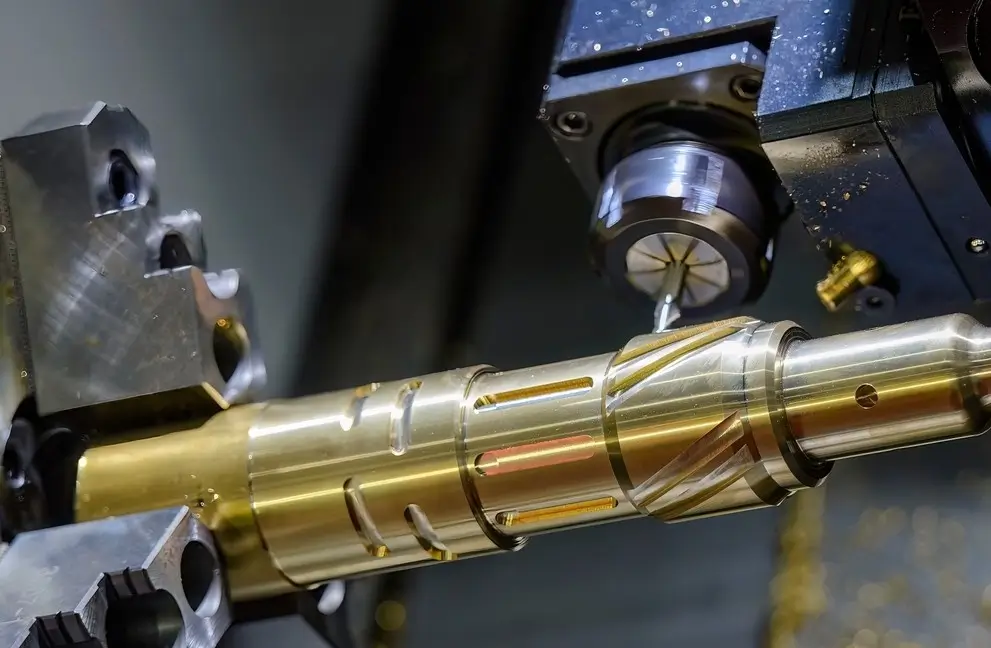
Why Brass is the Go-To Alloy for High-Value CNC Machining
Brass is an alloy primarily composed of copper and zinc. By varying the proportions of these two elements, manufacturers can impart a wide range of mechanical, electrical, and aesthetic properties. This inherent versatility is what makes brass a staple in CNC machining workshops worldwide.
What makes it truly exceptional for manufacturing?
1. Unmatched Machinability: The 100% Standard
Brass is universally recognized for its exceptional machinability. Specifically, C36000 (Free-Cutting Brass) is often used as the benchmark, rated at 100% on the machinability scale. This rating translates directly to your bottom line: faster cycle times, higher throughput, and significantly reduced tool wear compared to machining steel or even stainless steel.
2. Superior Corrosion Resistance
The copper content in brass provides a natural defense against corrosion. When exposed to air, brass forms a thin, protective patina that resists atmospheric attack, moisture, and many chemicals. This makes it a prime choice for plumbing, marine, and HVAC applications. For more aggressive environments, alloys like Naval Brass (C464) are engineered with tin for exceptional saltwater resistance.
3. Excellent Electrical and Thermal Conductivity
Brass is an outstanding conductor of electricity and heat. While pure copper is a better conductor, brass offers a crucial trade-off: improved mechanical strength and machinability with conductivity that is more than adequate for most electrical and thermal applications, from terminals to heat sinks.
4. Aesthetics and Functional Finish
Beyond its physical properties, brass has a naturally attractive, gold-like appearance. It readily accepts a wide range of surface finishes—from electroplating (nickel, chrome) to powder coating and polishing—making it suitable for both functional and decorative final products.
5. 100% Recyclable and Environmentally Sound
Sustainability is no longer optional. Brass is a highly circular material; a significant portion of the global brass supply comes from recycled scrap. This not only lowers the material’s environmental footprint but also contributes to cost stability, a key consideration for strategic procurement.
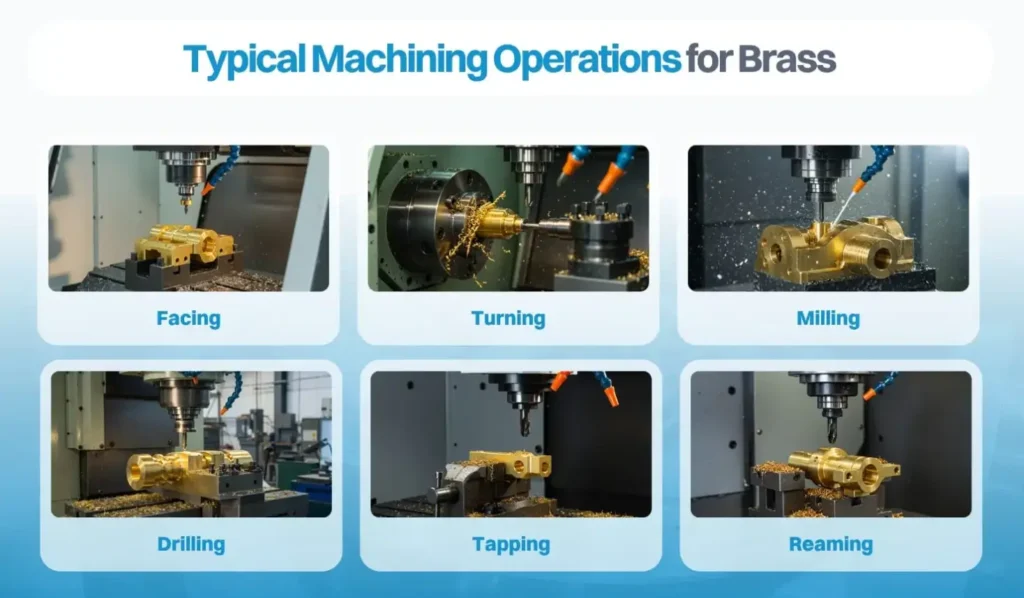
Deep Dive: Key Brass Material Properties for Machinists
Understanding the mechanical properties of brass is essential for design for manufacturability (DFM). The data below offers a clear picture of what to expect from common brass alloys used in our CNC machining services.
Mechanical Properties of Common Brass Alloys
| Property | C360 (Free-Cutting) | C260 (Cartridge Brass) | C464 (Naval Brass) |
|---|---|---|---|
| Tensile Strength (MPa) | 320 – 450 | 330 – 530 | 380 – 480 |
| Yield Strength (MPa) | 170 – 310 | 115 – 420 | 165 – 370 |
| Elongation at Break | 15 – 50% | 23 – 57% | 20 – 25% |
| Hardness (Brinell) | 90 – 120 HB | 110 – 160 HB | 115 – 140 HB |
| Machinability Rating | 100% | 30% | 30% |
| Corrosion Resistance | Moderate | Good | Excellent (Saltwater) |
Data above represents typical ranges. Specific values can be tailored through heat treatment and work hardening.
Common Brass Alloys for CNC Machining: A Comparative Analysis
Choosing the correct grade is the single most important decision in any brass machining project. Your choice impacts not only the final part’s performance but also the cost and manufacturability of the entire run. At KaiSpeed, we help clients navigate this critical selection process every day.
Here is a detailed look at the workhorses of the brass family.
C360 (Free-Cutting Brass): The High-Efficiency Champion
The keystone of any high-volume brass machining project. Its 3% lead content acts as a chip breaker and internal lubricant, allowing for extremely high cutting speeds and feeds. This minimizes tool changeover time and delivers exceptional part consistency.
- Key Applications: Precision turned parts, electronic connectors, screw machine components, valve bodies, and hydraulic fittings. If your project demands thousands of identical, high-precision parts, KaiSpeed’s C360 brass machining is the cost-effective solution.
C260 (Cartridge Brass): The Formability Expert
Known for its outstanding ductility and cold working properties. While not as machinable as C360, its strength and corrosion resistance make it a top choice for applications involving post-machining forming or bending.
- Key Applications: Electrical terminals, ammunition casings, radiator cores, and decorative hardware. Our team can expertly machine C260 brass parts for clients needing high-strength, corrosion-resistant components.
C464 (Naval Brass): The Corrosion Warrior
The premier choice for applications battling aggressive environments. The addition of tin makes this alloy exceptionally resistant to dezincification and corrosion in seawater, salt-laden atmospheres, and industrial chemicals.
- Key Applications: Marine hardware like propeller shafts, pump components, and condenser plates; aerospace fittings; and industrial valve stems. For maritime projects, investing in C464 brass machining ensures long-term reliability where failure is not an option.
Other Important Grades
- C280 (Muntz Metal): A high-zinc brass known for its hot working capabilities, often used as a cost-effective, marine-resistant sheeting for boat hulls.
- C385 (Architectural Bronze): The standard for architectural extrusions, offering a good balance of machinability, strength, and aesthetic appeal for profiles like window frames and handrails.
Cost and Performance Trade-offs
| Alloy | Machining Cost Factor | Material Cost | Ideal For… |
|---|---|---|---|
| C360 | Lowest | Moderate | High-volume precision parts, complex geometries |
| C260 | Moderate | Moderate | Parts requiring subsequent forming, high-ductility needs |
| C464 | Highest | High | Extreme corrosion environments, high-strength requirements |
*Working with KaiSpeed means we don’t just machine parts; we help you optimize them. Our engineers provide DFM feedback that can switch an expensive C464 part to a more cost-effective solution with the right surface treatment, balancing all trade-offs.*
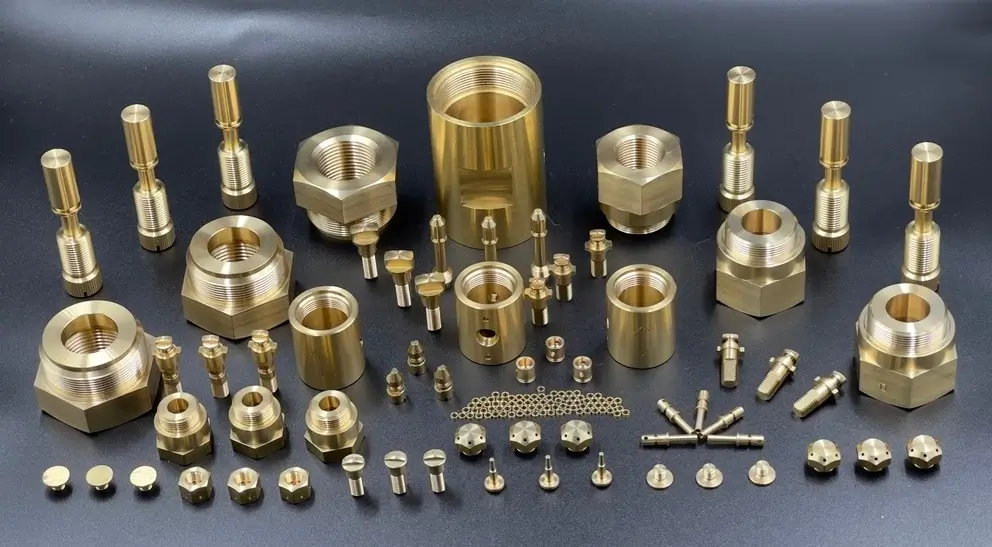
Critical Design and Machining Considerations
Producing perfect brass components requires more than just loading stock. It demands a deep understanding of the metal’s behavior under tool pressure. Our process engineers at KaiSpeed embed the following best practices into every project.
Optimizing Cutting Parameters for Efficiency
The platform of a modern CNC machine is only as good as the code it runs. Brass allows for speeds and feeds that would destroy tools in other materials.
| Parameter | Recommended Range for C360 | Effect of Optimization |
|---|---|---|
| Cutting Speed | 100-200 m/min | Faster cycle times, reduced heat generation |
| Feed Rate (Roughing) | 0.15-0.5 mm/rev | Maximizes material removal rate |
| Feed Rate (Finishing) | 0.05-0.1 mm/rev | Achieves superior surface finish (Ra 0.8 or better) |
| Tooling | Sharp, polished carbide | Minimizes built-up edge (BUE), prolongs tool life |
DFM Tips for Brass Components
Smart design choices translate directly to manufacturing savings and part integrity:
- Avoid Thin Walls: Maintain a minimum wall thickness of 0.5mm to prevent vibration and deformation during machining.
- Design in Radii: Internal corners must have a radius; sharp 90° corners create stress risers and necessitate more expensive, delicate tooling. Our team at KaiSpeed can advise on optimal radii for your design.
- Thread with Confidence: Brass holds threads beautifully, but always include a 45° chamfer at thread entries to prevent burrs and cross-threading.
- Be Mindful of Tolerances: Specify tight tolerances only on critical-mating features. A blanket tight tolerance across the entire part drastically increases cost for no functional gain.
Where Precision Meets Industry: Key Applications
The versatility of brass makes it an invisible, yet essential, part of modern life. As a premier custom brass parts supplier, KaiSpeed services a cross-section of industries that rely on our quality and precision.
- Electronics & Telecommunications: The unmatched combination of conductivity and manufacturability makes brass the material of choice for connectors, RF shielding cans, PCB standoffs, and switch components that form the backbone of reliable electronics.
- Plumbing & HVAC: From drinking water systems to high-pressure gas applications, brass’s corrosion resistance and antimicrobial properties make it a safe, durable choice. We machine precision valve cores, faucet bodies, and custom fittings that meet stringent safety standards.
- Automotive & Aerospace: In an industry where weight and reliability are paramount, brass components are found in fuel system connectors, sensor housings, and hydraulic fittings. Its resistance to corrosion from road salts and fluids is a distinct advantage.
- Robotics & Automation: Low friction, non-sparking, and wear-resistant properties make brass invaluable for the pneumatic connectors, bearings, and moving parts that keep automated systems running smoothly 24/7.
- Medical & High-End Consumer Goods: Leveraging its visual appeal and bacteriostatic properties, precision-machined brass is used in surgical instruments, high-end watch components, and luxury architectural hardware.
Conclusion: The Strategic Advantage of KaiSpeed’s Brass CNC Machining
Selecting brass for your project is a sound engineering decision. Optimizing its potential is where KaiSpeed excels. Our approach goes beyond simply cutting metal; we embed value into every phase—from material science expertise and DFM consultation to precision execution and rigorous quality assurance. Whether your requirements call for high-volume C360 connectors or chemically resilient C464 marine components, we have the engineering depth and manufacturing agility to deliver parts that meet your specs exactly and arrive on-time.
Don’t leave your critical parts to chance. Partner with a machining service that understands the nuance of brass.
Contact KaiSpeed today to discuss your next project, and let our team show you how we can optimize your designs for performance, cost, and speed.