
You’ve invested in precision CNC machining to create parts with tight tolerances. But will those parts withstand abrasion, corrosion, and high friction in real-world use? This is where surface finishing for CNC parts becomes critical.
For many engineers and procurement professionals, the answer lies in hard chrome plating for CNC parts. This electroplating process transforms the surface of metal components, dramatically extending their service life. Whether you need hard chrome plating for hydraulic CNC parts or decorative chrome for CNC machined parts, understanding the process is essential.
At KaiSpeed, we frequently recommend industrial hard chrome coating for customers in hydraulics, aerospace, and heavy equipment. This guide explains:
- What the hard chrome plating process involves for CNC machined components
- How it differs from decorative chrome
- Key benefits and industry applications
- Chrome plating thickness for CNC tolerances – critical for designers
- CNC machining surface treatment comparisons
- How to decide if it’s right for your project
First, explore our CNC machining capabilities to see what we can create for you.
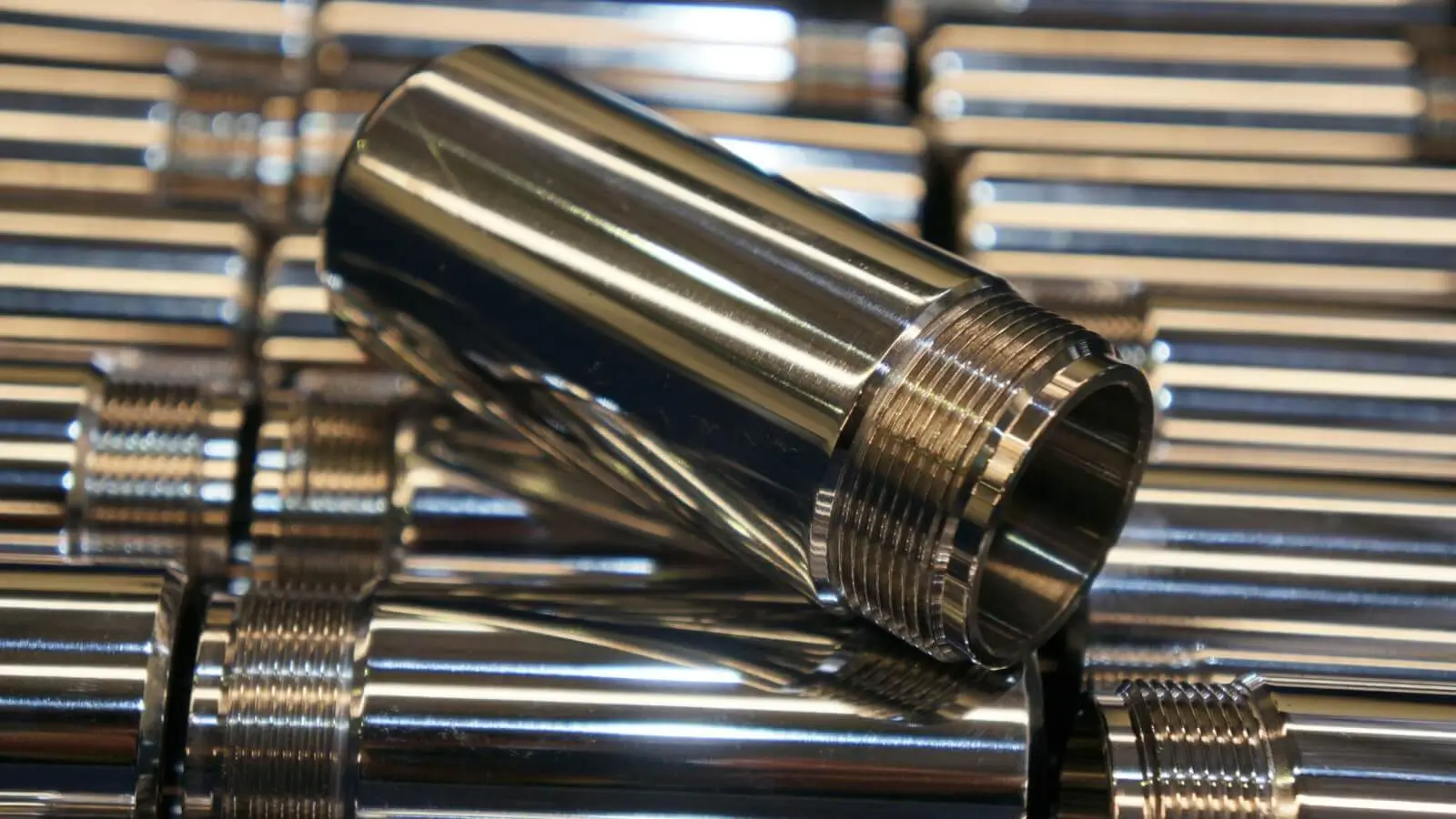
What is Hard Chrome Plating for CNC Machined Components?
Hard chrome plating for CNC parts, also known as industrial or engineering chrome, is an electrochemical process that deposits a thick layer of chromium onto the surface of a precision CNC machined metal part — typically steel, stainless steel, copper, or brass. This post-processing for CNC machining is one of the most popular surface treatments available.
Unlike its decorative counterpart, hard chrome is not about aesthetics. Its primary purpose is functional:
- Increase surface hardness (typically 65-70 HRC)
- Reduce friction (coefficient of friction as low as 0.05-0.12 when lubricated)
- Provide exceptional wear and abrasion resistance
- Offer corrosion protection
- Restore undersized or worn parts to original dimensions
- Maintain the tight tolerances achieved during precision CNC machining
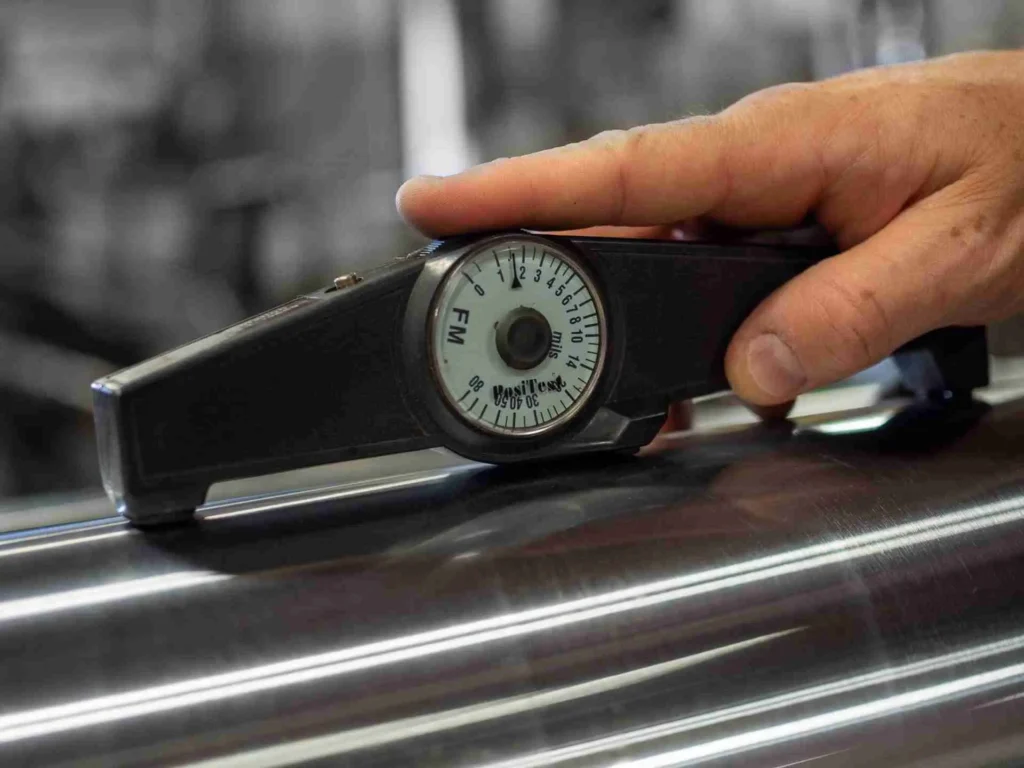
Hard chrome deposits are much thicker than decorative chrome, ranging from 0.0002” to 0.01” (5–250 microns). Understanding chrome plating thickness for CNC tolerances is crucial because the added material will change your final dimensions. Most experienced engineers specify ”chrome + grind” – plate slightly oversize, then grind to final tolerance.
Quick comparison: Decorative chrome is measured in millionths of an inch; hard chrome is measured in thousandths.
The Hard Chrome Plating Process for Precision CNC Components
The hard chrome plating process for CNC components involves several critical steps. Missing any step compromises the final quality, potentially ruining your expensive precision CNC part.
H3: Step 1: Surface Preparation & Cleaning
The CNC machined part must be chemically clean. Any oil, grease, or dirt from the CNC machining process will prevent the chrome from adhering. This typically involves:
- Solvent degreasing to remove bulk oils and cutting fluids
- Alkaline cleaning to remove surface contaminants
- Rinsing with deionized water
- Ultrasonic cleaning for complex geometries with internal passages
Step 2: Surface Activation (Etching)
The part is immersed in an acid bath (often sulfuric or hydrochloric acid). This microscopically etches the surface, creating a “key” for the chrome layer to grip. This step is particularly important for hard chrome plating for precision CNC components made of stainless steel or other passive alloys.
Step 3: Pre-plating (Optional, but common)
For some base materials (e.g., aluminum, stainless steel), a nickel or copper underlayer is applied. This improves adhesion and provides additional corrosion resistance. Chrome plating for precision CNC components made of aluminum requires a specialized zincate process first.
Step 4: Chrome Plating Bath
The part is submerged in a chromic acid (CrO₃) solution with a small amount of sulfate catalyst. It acts as the cathode (negative terminal). Lead anodes (positive) complete the circuit. A controlled direct current is applied, causing chromium ions to deposit onto the CNC machined part.
Key parameters controlled:
- Bath temperature: ~120–140°F (49–60°C)
- Current density: Typically 1.5–2.5 A/in²
- Plating time: Determines final thickness (approx. 0.001” per 30–60 minutes)
Step 5: Post-Treatment & Finishing
After reaching the desired thickness, the part is:
- Rinsed thoroughly to remove residual chemicals
- Dried immediately
- Ground or polished if final dimensions or surface finish (e.g., mirror finish on hydraulic rods) are required
Step 6: Hydrogen Embrittlement Relief (for high-strength steels)
CNC machined parts made from high-strength steels (≥ 40 HRC) can suffer from hydrogen embrittlement after plating. A baking process (typically 375°F / 190°C for 8–24 hours) within 4 hours of plating relieves this. Always specify this requirement on your CNC machining drawing.
Hard Chrome vs. Decorative Chrome for CNC Machined Parts
| Feature | Hard Chrome (Industrial) | Decorative Chrome |
|---|---|---|
| Primary Purpose | Wear resistance, friction reduction, corrosion protection | Aesthetics (bright, mirror-like finish) |
| Typical Thickness | 0.0002” – 0.01” (5–250 µm) | 0.00002” – 0.0002” (0.5–5 µm) |
| Surface Hardness | 65–70 HRC | 40–45 HRC (due to thinness) |
| Underlayer | Usually none (or nickel for corrosion) | Nickel (and sometimes copper) |
| Appearance | Matte grey (can be ground to bright) | Brilliant, reflective |
| Cost | Higher (more material, longer process) | Lower for thin layers |
| Typical Applications | Hydraulic rods, engine components, molds, industrial rolls | Automotive trim, faucets, kitchenware, motorcycle parts |
| CNC Part Compatibility | High – maintains tolerances after grinding | Low – thin layer may not hide machining marks |
Key takeaway: For precision CNC machining applications that demand durability, choose hard chrome.
Benefits of Hard Chrome Plating for CNC Machined Parts
Why specify hard chrome plating for CNC parts? Here are the quantifiable benefits.
1. Exceptional Wear & Abrasion Resistance
Hard chrome plating for CNC parts extends the life of components by 2-10 times compared to unplated steel. The hard, low-friction surface resists galling, scoring, and abrasive wear. This is why many CNC machined parts in hydraulic systems receive hard chrome.
2. Low Coefficient of Friction
Lubricated hard chrome has a coefficient of friction as low as 0.05–0.12. This reduces heat generation, energy loss, and wear on mating parts (e.g., piston rings in cylinders). For precision CNC components that slide against seals or bearings, this is critical.
3. Corrosion Protection
Chromium naturally forms a passive chromium oxide layer that is chemically stable and self-healing. In salt spray tests, hard chrome plated CNC parts often last 500+ hours without red rust.
4. Dimensional Restoration
Worn or undersized CNC machined parts can be plated back to original specifications, saving the cost of new machining or replacement. This is common for hydraulic piston rods and large industrial rolls – a cost-effective CNC machining surface treatment strategy.
5. High-Temperature Stability
Hard chrome maintains its hardness and wear resistance up to approximately 700°F (370°C) , making it suitable for engine components and other high-temperature CNC machined parts.
6. Excellent Adhesion (When Done Correctly)
Proper surface preparation creates a bond that is essentially metallurgical. The chrome becomes part of the surface, not just a coating – essential for chrome plating for precision CNC components that experience high stress.
Common Applications – Which CNC Machined Parts Get Hard Chrome?
| Industry | Typical CNC Machined Parts | Why Hard Chrome? |
|---|---|---|
| Hydraulics | Piston rods, cylinder bores, valve spools | Wear resistance, low friction, corrosion protection, seal longevity |
| Aerospace | Landing gear struts, actuator rods, hydraulic fittings | High load capacity, fatigue resistance, strict tolerances |
| Automotive (Performance) | Piston rings, valve stems, shock absorber rods | Reduce friction, withstand high temperatures, extend life |
| Plastics & Molding | Injection mold cores, cavities, ejector pins | Wear resistance against glass-filled plastics, release properties |
| Printing & Converting | Gravure rolls, anilox rolls, embossing cylinders | Abrasion resistance, dimensional stability |
| Heavy Equipment | Excavator cylinder rods, pivot pins, bucket pins | Extreme wear resistance, corrosion in outdoor environments |
| Oil & Gas | Pump shafts, valve stems, drill components | Harsh chemical and abrasive environments |
| Robotics & Automation | Linear actuator shafts, guide rods, precision joints | Low friction, long service life, consistent positioning |
If you are producing any of these CNC machined parts, you should consider hard chrome plating for precision CNC components as your default CNC machining surface treatment.
Material Compatibility for Chrome Plating
| Base Material | Suitable for Hard Chrome? | Notes for CNC Machined Parts |
|---|---|---|
| Steel (carbon, alloy, tool steel) | Yes | Most common substrate. Pre-plating cleaning critical. Maintains CNC tolerances well. |
| Stainless Steel | Yes | Requires special activation (e.g., Wood’s nickel strike) to ensure adhesion. Common for precision CNC components in medical and food equipment. |
| Aluminum | Yes, with intermediate layer | Requires zincate process followed by copper or nickel plate before chrome. Our custom aluminum machining guide covers this. |
| Copper & Brass | Yes | Often used for decorative chrome; functional hard chrome possible. Good for electrical CNC parts. |
| Titanium | Yes (specialized) | Rare. Requires very specific activation steps. For specialized aerospace CNC machined parts. |
| Plastic (ABS, etc.) | No | Cannot withstand plating bath chemistry or temperatures. Use electroless nickel or PVD instead. |
See how we prepare different materials in our standard surface finishes gallery.
Design Considerations for Plating CNC Machined Parts
To get the best results from hard chrome plating for CNC parts, follow these design guidelines:
1. Specify Chrome Plating Thickness for CNC Tolerances
Hard chrome is typically specified in thousandths of an inch (e.g., 0.001” per side) or microns. Your CNC machining program must account for this buildup. For example, if you need a final diameter of 1.000” with 0.001” of chrome per side, you must machine the part to 0.998” undersize.
2. Add Grinding Allowance
For precise final dimensions (e.g., shafts with bearing fits), specify ”chrome + grind” . Plate slightly oversize (e.g., 0.002” oversize), then grind to final tolerance. This is standard practice for precision CNC components.
3. Avoid Sharp Corners
Chrome builds up faster on outside corners (”dog ears”) and slower in recesses. Specify a radius of at least 0.010” (0.25 mm) on all edges of your CNC machined part.
4. Mask Off Areas
If only specific surfaces need chrome (e.g., a shaft journal), clearly mark the areas to be masked (using tape, wax, or plastic caps) on your CNC machining drawing.
5. Consider Hydrogen Embrittlement
If your steel CNC part has a hardness ≥ 40 HRC, mandate post-plate baking and specify the timing (usually within 4 hours of plating).
6. Surface Finish Before Plating
The CNC machined part should have a surface finish of Ra 16 µin (0.4 µm) or better before plating. Chrome will not hide machining marks – it may even accentuate them.
Hard Chrome vs. Other CNC Machining Surface Treatments
| Property | Hard Chrome | Electroless Nickel | Hard Anodizing (Type III) | Zinc Plating | Black Oxide |
|---|---|---|---|---|---|
| Hardness (HRC) | 65-70 | 48-55 | 45-60 | 20-30 | 55-60 (thin) |
| Wear Resistance | Excellent | Very Good | Good | Poor | Fair |
| Corrosion Resistance | Excellent (if thick) | Excellent | Good (sealed) | Good (with passivate) | Poor |
| Friction (lubricated) | Very Low (0.05-0.12) | Low (0.10-0.15) | Moderate | Moderate | Moderate |
| Max Thickness | 0.010”+ | 0.005” max | 0.003” max | 0.001” max | 0.0001” |
| Applicable Materials | Most metals | Most metals | Aluminum only | Steel only | Steel only |
| Dimensional Change | Significant | Moderate | Minor (50% buildup, 50% penetration) | Minor | Negligible |
| Best For CNC Parts | High-wear shafts, hydraulic rods | Internal passages, complex geometries | Aluminum housings, light-duty wear | Low-cost corrosion protection | Cosmetic, oil retention |
When to choose hard chrome: Maximum wear resistance, lowest friction, or restoring dimensions – the most durable CNC machining surface treatment for steel parts.
When to choose electroless nickel: Need uniform thickness on complex internal passages, non-magnetic, or lower temperature process.
When to choose hard anodizing: Your CNC part is aluminum, and you need moderate wear resistance at lower cost.
FAQ
Q1: What is the typical chrome plating thickness for CNC tolerances?
A: Hard chrome is typically applied at 0.0002” to 0.010” (5–250 µm) per side. For parts requiring tight tolerances (e.g., bearing journals), we recommend plating oversize then grinding to final dimension. Always discuss chrome plating thickness for CNC tolerances with your machining partner during design.
Q2: How does hard chrome plating for CNC parts affect dimensional accuracy?
A: Hard chrome adds measurable thickness. You must account for this in your CNC machining program or specify post-plate grinding. With proper planning, you can hold ±0.0005” (±0.0127 mm) after grinding.
Q3: Can you apply hard chrome plating for precision CNC components with internal threads?
A: Yes, but with caution. Chrome builds up on threads, changing pitch diameter. For critical threaded features, consider masking the threads before plating or specifying a thread grinding operation after plating.
Q4: What is the difference between hard chrome vs anodizing for CNC parts?
A: Hard chrome is an additive coating applied to steel, stainless, copper, or brass. Anodizing is a conversion coating for aluminum only. For steel CNC parts requiring wear resistance, hard chrome is the superior choice. For aluminum CNC parts, choose hard anodizing.
Q5: Is trivalent chrome plating for CNC components as good as hexavalent?
A: Trivalent chrome offers approximately 85-90% of the hardness and wear resistance of hexavalent chrome. It is safer for workers and the environment. For light to medium-duty applications, trivalent chrome plating for CNC components is an excellent choice. For extreme wear applications (hydraulic rods, heavy machinery), hexavalent is still preferred.
Q6: How long does hard chrome plating for CNC parts last?
A: In normal use (hydraulic cylinder, mold, etc.), properly applied hard chrome on CNC machined parts can last 15-25 years or millions of cycles. In high-wear applications, it still outlasts unplated steel by 2-10 times.
Q7: Can you perform chrome plating for precision CNC components with complex geometries?
A: Yes, but with limitations. Deep blind holes, sharp internal corners, and very narrow slots may have reduced chrome coverage. We recommend discussing your CNC part geometry with our engineers before specifying hard chrome plating.
Q8: What surface finish (Ra) can be achieved after hard chrome and grinding on CNC machined parts?
A: As-plated hard chrome on CNC machined parts is typically matte (Ra ~16-32 µin). After grinding and polishing, finishes as fine as Ra 2–4 µin (0.05–0.1 µm) are possible – suitable for hydraulic rod seals and precision bearings.
Q9: How do I specify hard chrome plating for CNC parts on my drawing?
A: Use notes like:
HARD CHROME PLATE PER AMS 2460 (or ASTM B650)0.001” (25 µm) MINIMUM THICKNESS PER SIDEGRIND AFTER PLATE TO FINAL DIMENSIONSBAKE WITHIN 4 HOURS AFTER PLATING TO RELIEVE HYDROGEN EMBRITTLEMENTMASK THREADED HOLES – P/N [X]
Q10: Can you combine hard chrome plating for precision CNC components with other surface treatments?
A: Yes. Common combinations include:
- Hard chrome + PTFE impregnation for ultra-low friction
- Hard chrome + grinding + polishing for mirror finish on hydraulic rods
- Nickel underlayer + hard chrome for maximum corrosion protection
KaiSpeed – Your Single Source for CNC Machining + Chrome Plating
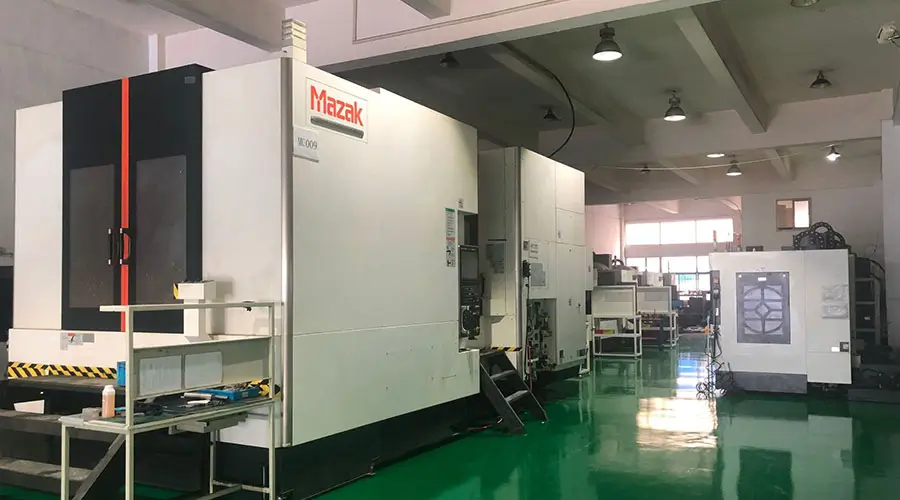
At KaiSpeed, we understand that surface finish is as critical as dimensional accuracy. We are not a plating shop, but we act as your single point of accountability for CNC machining and post-processing for CNC machining.
When you work with us for hard chrome plating:
- We CNC machine your part to the correct undersize for the specified plating thickness.
- We manage the hard chrome plating process through our qualified, certified plating partners (including hexavalent and trivalent chrome lines).
- We arrange post-plate grinding if required.
- We inspect and certify the final dimensions and surface finish.
- We ship one complete, ready-to-use component.
One supplier. One quality standard. One shipment. No finger-pointing.
Ready to add hard chrome to your next CNC machined part? Request a quote for your project.
Summary
The hard chrome plating process is a proven, cost-effective CNC machining surface treatment that dramatically improves the wear resistance, friction characteristics, and corrosion protection of your precision CNC components.
Key takeaways for B2B buyers specifying CNC machined parts:
- Specify hard chrome for function; decorative chrome for looks.
- Account for dimensional change in your CNC machining program.
- Consider trivalent chrome plating for CNC components for environmentally sensitive applications.
- Always add a grinding allowance for tight tolerances.
- Partner with a CNC machining shop (like KaiSpeed) that understands hard chrome plating specifications and manages the entire supply chain.
Ready to extend the life of your precision CNC components?
👉 Request a quote – Upload your CAD file and note “Hard Chrome Plating” in the requirements.
👉 Email our engineers: [email protected] – We will provide DFM feedback and plating recommendations.
👉 Download our Chrome Plating Spec Sheet – Contact us to request the PDF.
KaiSpeed: Precision CNC machining. Engineered surface finishes.