
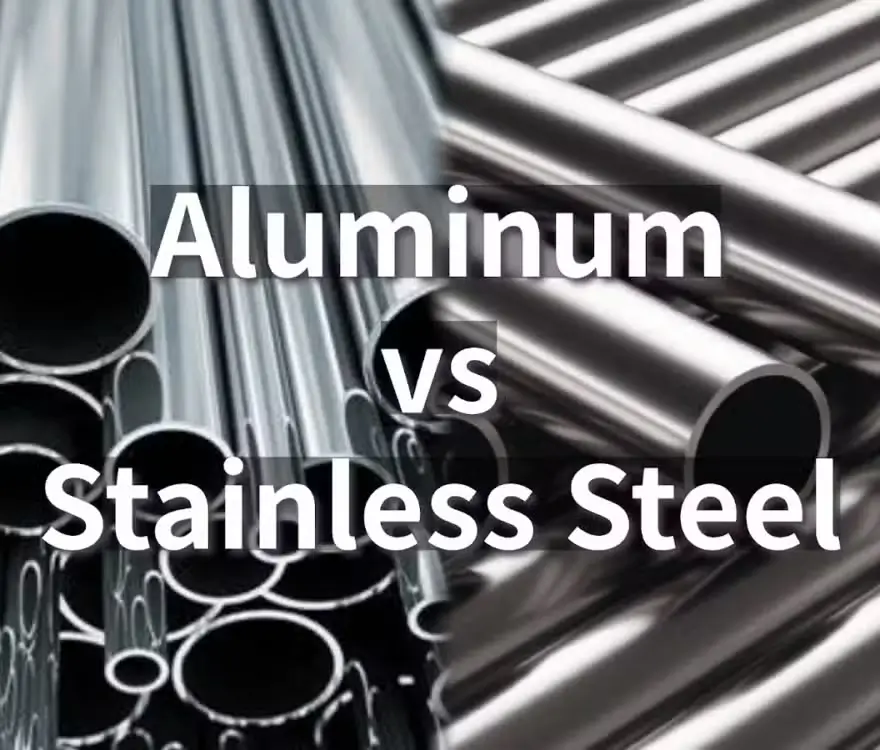
When you’re planning CNC machined parts, one of the first big decisions is material selection. Among metal options, aluminum and stainless steel are two of the most common—and the choice between them affects weight, durability, cost, and how difficult the part is to machine.
From a CNC shop’s perspective, aluminum vs stainless steel machining is not just a material comparison; it’s a trade-off between speed, tool life, surface finish, and long-term performance in the field. Understanding the differences helps you design smarter and avoid surprises in quotation, lead time, or quality.
In this article, we’ll walk through the key properties of aluminum and stainless steel, typical applications, and the main machining challenges for each—plus some design-for-manufacturing (DFM) tips based on practical shop experience.
Material Overview: Aluminum vs Stainless Steel
Aluminum in CNC Machining
Aluminum is a lightweight, versatile metal with a density of about 2.7 g/cm³, roughly one-third that of steel. It offers:
- Low density and weight
- Good strength-to-weight ratio (especially in alloys like 6061 and 7075)
- Excellent machinability – it cuts easily and supports high cutting speeds
- Natural corrosion resistance thanks to its thin protective oxide layer
- Good thermal and electrical conductivity
These characteristics make aluminum a favorite for CNC machining when parts need to be light, cost-sensitive, and produced quickly.
Stainless Steel in CNC Machining
Stainless steel is an iron-based alloy containing chromium (usually ≥11%) which forms a passive oxide film that protects against corrosion. Common grades like 304 and 316 have densities around 7.9–8.0 g/cm³, about three times heavier than aluminum.
Key characteristics:
- High strength and hardness
- Excellent corrosion resistance, especially in aggressive or high-moisture environments
- Good heat resistance
- More difficult to machine – higher cutting forces, more heat, greater tool wear
Stainless is the “go-to” choice when hygiene, structural strength, or harsh environments matter more than weight or machining cost.
Key Properties Comparison for Machining
Below is a simplified comparison focused on CNC machining and functional performance.
| Property | Aluminum | Stainless Steel (e.g., 304/316) |
|---|---|---|
| Density | ~2.7 g/cm³ (very light) | ~7.9–8.0 g/cm³ (much heavier) |
| Strength (typical) | Moderate; high for alloys like 7075 | High strength and hardness |
| Corrosion resistance | Good; excellent in many environments | Excellent; suitable for harsh/chemical use |
| Thermal conductivity | High (good for heat dissipation) | Lower; retains heat around the cutting zone |
| Electrical conductivity | High | Low |
| Machinability | Easy; high cutting speeds, low forces | Difficult; work hardening, more tool wear |
| Raw material cost | Generally lower per kg | Generally higher per kg |
| Typical finish options | Anodizing, painting, plating | Passivation, polishing, electro-polishing |
From a pure machining point of view, aluminum wins on speed and tool friendliness. Stainless steel wins on mechanical strength and durability.
Typical Applications of Aluminum CNC Parts
Because of its light weight and machining efficiency, aluminum is widely used across many industries:
- Aerospace – structural components, brackets, housings, heat sinks
- Automotive & EV – engine/drive components, battery enclosures, lightweight structural parts
- Electronics & Consumer Devices – device housings, heat sinks, frames, internal brackets
- Robotics & Automation – robotic arms, end-effectors, custom fixtures, sensor housings
- General Industrial & Machinery – machine covers, frames, guards, fixtures
If you care about weight reduction, thermal management, and cost-effective machining, aluminum is often the first candidate.
Typical Applications of Stainless Steel CNC Parts
Stainless steel shines where corrosion resistance, mechanical strength, and hygiene standards are critical:
- Medical & Healthcare – surgical instruments, implants (specific grades), diagnostic equipment parts
- Food & Beverage Processing – valves, fittings, mixers, tanks, nozzles
- Chemical & Pharmaceutical Equipment – manifolds, pumps, pressure components
- Marine & Offshore – corrosive environments, fasteners, brackets, shafts
- Energy & Heavy Industry – pressure vessels, turbine components, structural members
- Architectural & Consumer Products – handles, fasteners, decorative components
For long service life in harsh or hygienic environments, stainless steel is hard to beat.
Machining Aluminum: Advantages & Challenges
Advantages in CNC Machining
Aluminum is often cited as one of the easiest metals to machine:
- High cutting speeds & feeds – in many cases, aluminum can be machined 3–4× faster than stainless steel, reducing cycle time.
- Lower cutting forces – less stress on tools and fixtures, good for thin-walled parts.
- Good chip formation – when parameters are optimized, chips break cleanly and evacuate well.
- Excellent surface finish – with sharp tools and proper coolant, you can achieve high cosmetic quality.
Common Machining Issues with Aluminum
Despite its strengths, aluminum has its own challenges:
- Built-up edge (BUE) – material may stick to the cutting edge, harming surface finish. Good coolant and sharp tools help.
- Gummy behavior in certain soft alloys – may smear instead of cleanly cutting at poor parameters.
- Thermal expansion and distortion – aluminum expands more with heat than stainless; thin sections and long parts require careful fixturing and toolpath strategies.
- Burr formation – edges can form burrs if tools are dull or feeds/speeds are not optimized.
For production, a well-optimized aluminum process can be extremely fast, but it still demands attention to chip control, cooling, and dimensional stability.
Machining Stainless Steel: Advantages & Challenges
Strengths in Machined Components
Stainless steel parts bring several advantages once they’re finished:
- High mechanical strength and wear resistance
- Excellent corrosion resistance in wet, chemical, or marine environments
- Good performance at elevated temperatures
- Long service life and lower maintenance in demanding applications
Machining Challenges
However, these same properties make stainless steel much tougher to machine:
- Work hardening – if the tool dwells, rubs, or takes shallow cuts, the surface can harden, making subsequent passes harder and increasing tool wear.
- Higher cutting forces – you need rigid setups, robust fixturing, and stable tool holders to avoid chatter and dimensional issues.
- Heat concentration – stainless has lower thermal conductivity than aluminum, so heat stays near the cutting zone, stressing tools.
- Tool wear and tool cost – carbide tools, special geometries, and sometimes coated tools are needed, increasing per-part costs.
- Chip evacuation – long, tough chips may require chip-breaking strategies and plenty of coolant.
In practice, stainless steel machining typically runs at slower cutting speeds and shorter tool life compared to aluminum, which is why quotes for stainless parts are often noticeably higher.
Design & DFM Considerations
When deciding between aluminum and stainless steel, think not only about performance but also about how the part will be manufactured.
Wall Thickness and Geometry
- Aluminum – supports thinner walls more easily thanks to lower cutting forces; suitable for lightweight, complex geometries.
- Stainless steel – generally prefers slightly thicker walls and more robust features to avoid distortion and ensure stability under load.
Tolerance and Stability
- If you need very tight tolerances on long or thin parts, material choice matters:
- Aluminum can distort from thermal expansion and stress release; careful fixturing and process planning are key.
- Stainless is dimensionally more stable in some cases, but cutting forces and work hardening can still cause deflection.
Corrosion & Environment
Ask:
- Will the part be exposed to salt, chemicals, or frequent washdown?
- Are there food-contact or medical hygiene requirements?
- Is weight reduction critical (e.g., aerospace, robotics, handheld devices)?
Often the environment alone will push you toward one material or the other.
Surface Finishes
- Aluminum:
- Anodizing (clear, color, hard anodize) for corrosion resistance and aesthetics
- Bead blasting for a uniform matte appearance
- Painting or powder coating
- Stainless steel:
- Passivation to enhance corrosion resistance
- Brushed or polished finishes for aesthetics
- Electro-polishing for high hygiene or ultra-smooth surfaces
The finishing route may influence both cost and achievable cosmetic quality.
Cost Considerations: Beyond Raw Material Price
Cost differences between aluminum and stainless steel machining come from multiple factors:
- Raw Material Cost
- Stainless steel is generally more expensive per kg.
- You also need more mass to achieve the same volume, since it’s denser.
- Machining Time
- Aluminum typically machines 3–4× faster than stainless steel under similar conditions, drastically improving throughput.
- Stainless requires slower speeds, lighter cuts, and more tool changes.
- Tooling and Maintenance
- Stainless steel causes more tool wear, requiring higher-grade tooling and more frequent replacement.
- Coolant usage and machine maintenance can also be higher for stainless jobs.
- Scrap and Rework Risk
- Difficult-to-machine materials have a higher risk of scrap. Good DFM and process planning are essential to keep costs under control.
When you receive CNC machining quotes, these factors are all baked into the per-unit price—not just the material list price.
Choosing Between Aluminum and Stainless Steel for CNC Machining
Here’s a quick decision framework you can use:
Choose aluminum if:
- Weight reduction is critical (drones, robotics, handheld devices, aerospace).
- You need rapid prototyping or low-volume production with tight budgets.
- Parts need good thermal conductivity (heat sinks, enclosures, power electronics).
- Environmental exposure is moderate, or you can add surface treatments (anodizing, coating).
Choose stainless steel if:
- Components operate in harsh, corrosive, or washdown environments.
- The application involves high loads, wear, or high temperatures.
- You need excellent hygiene (food processing, medical, pharma).
- Long-term durability and low maintenance outweigh higher machining costs.
If your requirements sit in the middle, hybrid strategies are common—for example, using aluminum for non-critical structures and stainless steel only for exposed, high-stress, or hygienic components.
How KaiSpeed Supports Aluminum vs Stainless Steel Machining
At KaiSpeed, we work with both aluminum and stainless steel daily, from rapid prototypes to bridge builds and production runs. Our capabilities include:
- 3-axis, 4-axis, and 5-axis CNC machining
- CNC turning and Swiss-type turning for complex rotational parts
- Coordinated sheet metal and finishing services
- Surface treatments such as anodizing, plating, passivation, bead blasting, and more
For each project, we look at:
- Your functional requirements – load, environment, regulatory needs
- Your budget and volume – prototype, low-volume, or series production
- Your tolerance and cosmetic expectations
If needed, we can provide material recommendations and DFM feedback specifically comparing aluminum vs stainless steel machining for your design, so you understand the trade-offs in cost, weight, and durability before committing.
Conclusion
Aluminum and stainless steel are both excellent CNC machining materials—but they serve different priorities:
- Aluminum: lightweight, highly machinable, cost-effective, ideal for fast development and weight-sensitive parts.
- Stainless steel: strong, durable, and corrosion-resistant, ideal for demanding environments and long service life.
By understanding their properties, applications, and machining behaviors, you can make better material choices and get more accurate expectations for lead time, quality, and cost.
If you’re still unsure which material is right for your next part, you’re welcome to share your CAD files and requirements with KaiSpeed. We’ll be happy to review your design, compare aluminum vs stainless steel machining options, and recommend the most suitable path for your project.