

In the relentless pursuit of performance and safety, the aerospace industry operates on the cutting edge of material science. Every gram shaved off an airframe translates to fuel savings, extended range, and reduced emissions. Every component must withstand extreme forces, temperatures, and corrosion. In this high-stakes environment, one family of materials stands out: titanium and its alloys.
Titanium is often called the “space-age metal” for a reason. Its unparalleled strength-to-weight ratio and exceptional corrosion resistance make it indispensable for critical aerospace applications. However, machining titanium is notoriously challenging, often described as a “necessary evil” by manufacturers. At KaiSpeed, we see it not as an evil, but as a specialty—a challenge we have mastered to deliver flawless components for our aerospace partners.
This deep dive explores the “why” and “how” of titanium in aerospace, detailing its significant advantages and the very real difficulties it presents in machining, along with the advanced strategies we employ to overcome them.
Why Titanium is the Champion of Aerospace Materials
The selection of titanium for aerospace isn’t arbitrary; it’s a calculated decision driven by a set of properties that are perfectly suited to the demands of flight.
1. Exceptional Strength-to-Weight Ratio
This is titanium’s crowning glory. Titanium is as strong as many types of steel but is about 45% lighter. In aerospace, where every kilogram counts, using titanium for components like landing gear, engine mounts, and structural frames allows for a lighter overall aircraft without compromising structural integrity. This directly leads to improved fuel efficiency, greater payload capacity, and enhanced performance.
2. Superb Corrosion and Heat Resistance
Aircraft operate in harsh environments. They face moisture, salt, and wide temperature fluctuations. Titanium forms a passive oxide layer that makes it highly resistant to corrosion, far surpassing aluminum and steel. This is crucial for components exposed to the elements and for parts within the engine, where temperatures can soar. Titanium alloys retain their strength at temperatures where aluminum would begin to soften, making them ideal for jet engine components like compressor blades, discs, and casings.
3. Excellent Fatigue Resistance
Aircraft structures are subject to constant cycles of stress and vibration during takeoff, flight, and landing. Fatigue failure is a primary concern. Titanium’s high fatigue strength ensures that components can endure these repeated loading cycles over the lifespan of the aircraft, which is measured in decades and tens of thousands of flight hours. This reliability is non-negotiable for safety-critical parts.
4. Biocompatibility and Non-Magnetic Properties
While less celebrated, these properties are vital. Its non-magnetic nature is essential for avionics and navigation systems, preventing interference with sensitive magnetic sensors. Although more critical in medical implants, the biocompatibility speaks to titanium’s overall inertness and stability.
The Inherent Difficulties of Machining Titanium
For all its benefits as a finished product, titanium is a notoriously difficult material to machine. Understanding these challenges is the first step to overcoming them.
1. Low Thermal Conductivity
This is the root of most machining problems. Titanium is a poor conductor of heat. During machining, the heat generated by the cutting tool doesn’t flow away into the chips or the workpiece. Instead, it concentrates at the tool-workpiece interface, leading to extremely high localized temperatures. This accelerates tool wear, causes premature failure, and limits cutting speeds.
2. High Chemical Reactivity at Elevated Temperatures
At the high temperatures generated during cutting, titanium becomes chemically reactive and tends to alloy with the tool material. This causes galling, welding, and built-up edge (BUE), which further degrades the tool’s cutting ability and can damage the surface finish of the part.
3. High Strength at Elevated Temperatures
Unlike most metals, which soften when heated, titanium retains a significant portion of its strength at the high temperatures encountered in machining. This means the cutting tool is constantly working against a strong, resilient material, requiring high horsepower and leading to high cutting forces.
4. Low Elastic Modulus
Titanium is relatively “springy” or flexible. This can lead to deflection and vibration (chatter) during machining, especially when working with thin-walled structures common in aerospace. Chatter not only ruins surface finish but can also damage the tool and the part. It demands rigid setups and careful toolpath strategies.
KaiSpeed’s Expert Strategies for Successful Titanium Machining
Overcoming these challenges requires more than just a standard CNC machine; it demands expertise, specialized tooling, and a meticulous process. At KaiSpeed, our approach is built on years of specialized experience.
1. Advanced Tooling Selection
- Tool Material: We use premium, uncoated or AlTiN (Aluminum Titanium Nitride) coated carbide tools. In some high-volume applications, we employ PCD (Polycrystalline Diamond) tools for unparalleled wear resistance.
- Tool Geometry: Sharp cutting edges, high helix angles, and reduced contact areas are crucial to minimize heat generation and cutting forces. We select tools specifically engineered for titanium’s unique properties.
2. Optimized Cutting Parameters and Techniques
- Controlled Speeds and Feeds: We run at lower surface speeds (SFM) to manage heat but maintain adequate feed rates to prevent work hardening and ensure the tool is cutting, not rubbing.
- High-Pressure Coolant: We utilize high-pressure through-spindle coolant systems. This floods the cutting zone, effectively removing heat and evacuating chips, which is critical to prevent re-cutting and manage the low thermal conductivity.
3. Uncompromising Machine Tool Rigidity
Our CNC machining centers are selected for their exceptional power, stability, and damping characteristics. A rigid machine-tool-workpiece system is fundamental to suppressing vibration and chatter, ensuring dimensional accuracy and superior surface finishes on flexible titanium parts.
4. Intelligent CAM Programming
Our programmers use advanced CAM software to generate toolpaths that maintain a constant tool load, use trochoidal milling strategies to reduce heat, and avoid tool retractions into the material. This proactive approach prevents the conditions that lead to tool failure and part damage.
Key Aerospace Applications for Machined Titanium
Our precision machining capabilities bring titanium to life in critical aerospace systems:
- Aircraft Structures: Wing spars, fuselage frames, landing gear beams, and door components.
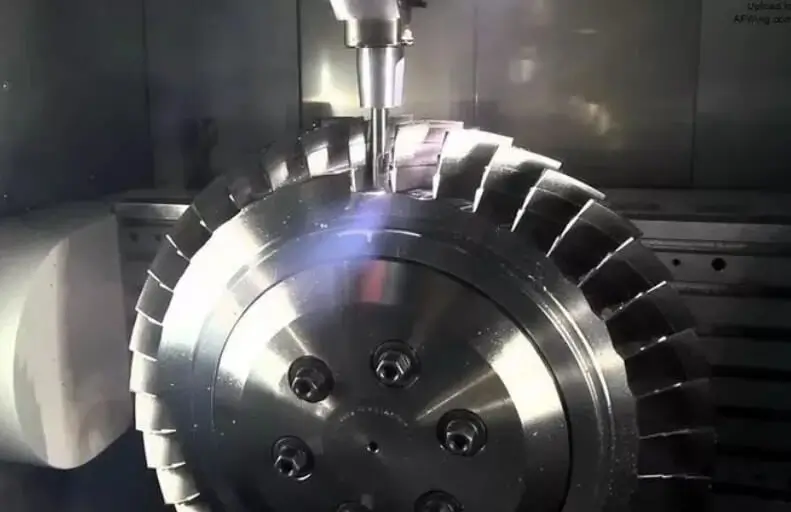
- Jet Engine Components: Fan blades, compressor discs (blisks), stator vanes, and engine casings.
- Spacecraft and Satellites: Propellant tanks, structural brackets, and heat shields, where the combination of light weight and strength is paramount.
- Avionics and System Mounts: Housings and brackets for sensitive navigation and communication equipment.
Partner with KaiSpeed for Your Aerospace Titanium Parts
Machining titanium is a discipline that separates capable machine shops from true aerospace specialists. The difficulties are real, but they are not insurmountable. They demand a partner with the right technology, deep material knowledge, and an unwavering commitment to quality.
At KaiSpeed, we have invested in building that expertise. We understand the stringent standards of the aerospace industry, from material traceability to rigorous inspection protocols.
Ready to leverage the power of titanium for your next aerospace project?
Contact our engineering team today to discuss your requirements and receive a comprehensive quote. Let us show you how our mastery of titanium machining can help your designs take flight.