
Sheet metal fabrication is one of the most widely used manufacturing methods in industrial equipment production. From automation systems and robotics to energy storage enclosures and aerospace panels, it offers a powerful combination of cost efficiency, scalability, and structural strength.
For engineers, procurement teams, and business leaders, understanding how sheet metal fabrication works—and how to optimize it—can significantly reduce production costs while improving performance and lead times.
This sheet metal fabrication guide provides a comprehensive breakdown of processes, materials, design best practices, and cost drivers, along with actionable insights from KaiSpeed’s real-world manufacturing experience.
🔍 Quick Answers
What is sheet metal fabrication?
Sheet metal fabrication is a process that transforms flat metal sheets into functional parts through cutting, bending, forming, and assembly.
What thickness is used in sheet metal fabrication?
Typical thickness ranges from 0.5 mm to 6 mm for industrial applications, depending on strength and weight requirements.
Is sheet metal fabrication cost-effective?
Yes, especially for thin-walled parts and medium-to-high production volumes, sheet metal fabrication is more cost-efficient than CNC machining.
What Is Sheet Metal Fabrication?
Sheet metal fabrication involves converting flat sheets into usable components using a combination of mechanical and thermal processes.
Key Characteristics
| Feature | Benefit |
|---|---|
| Thin Material | Lightweight structures |
| Forming-Based | Less material waste |
| High Repeatability | Ideal for mass production |
| Flexible Design | Supports complex geometries |
Core Sheet Metal Fabrication Processes
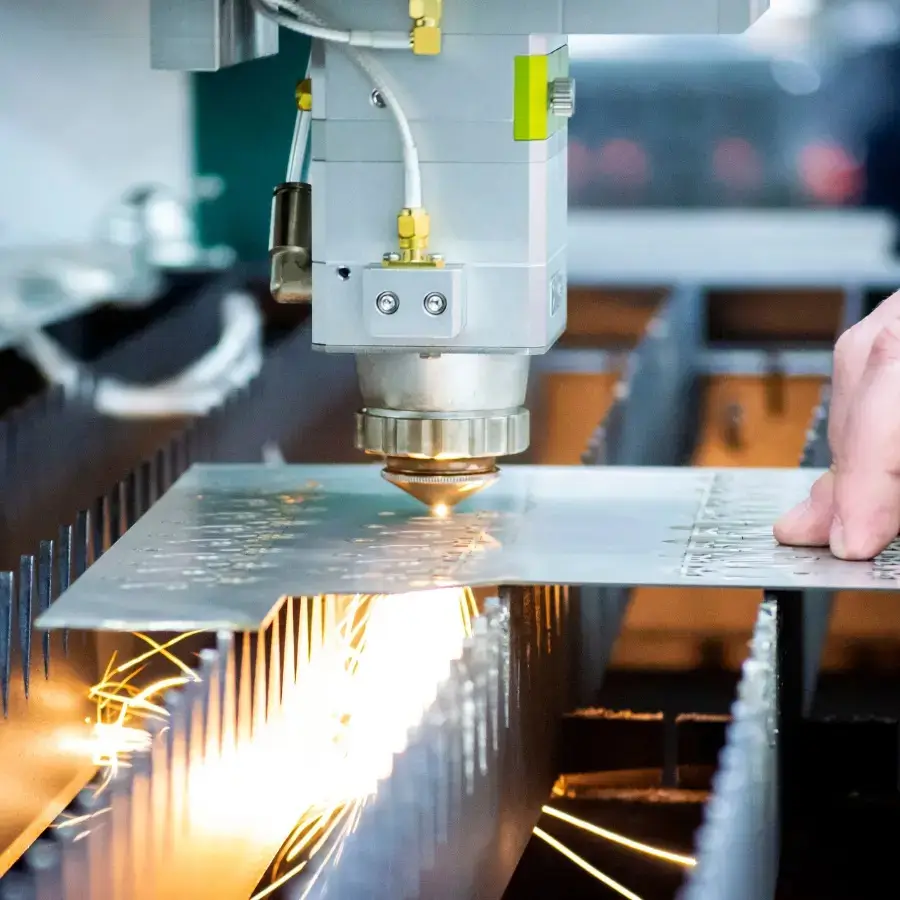
1. Cutting
Cutting is the first step and defines the shape of the part.
| Method | Accuracy | Best Use Case |
|---|---|---|
| Laser Cutting | Very high | Precision parts |
| Waterjet Cutting | High | Heat-sensitive materials |
| Plasma Cutting | Medium | Thick metals |
| Punching | High speed | High-volume holes |
👉 For precision parts, explore our precision laser cutting capabilities.
Q: Which cutting method is best for high precision?
Laser cutting provides the highest precision and is ideal for complex geometries.
2. Bending
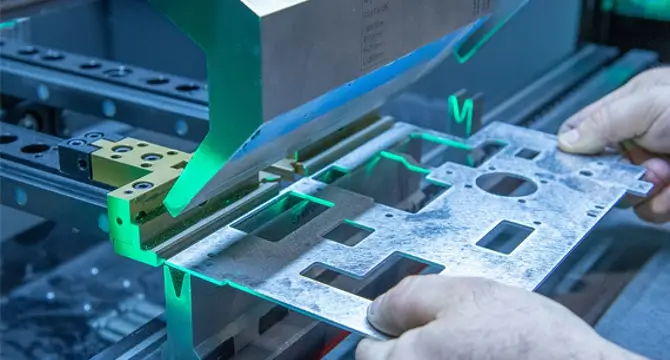
Bending transforms flat sheets into 3D shapes using press brakes.
| Factor | Recommendation |
|---|---|
| Bend Radius | ≥ material thickness |
| Bend Angle | Keep consistent |
| Material Type | Consider ductility |
👉 Learn more in our sheet metal bending design guide.
Q: What causes cracking during bending?
Cracking is usually caused by too small bend radius or improper material selection.
3. Forming & Stamping
Used for high-volume production and complex shapes.
- Deep drawing
- Roll forming
- Progressive stamping
4. Joining & Assembly
| Method | Advantage |
|---|---|
| Welding | Strong joints |
| Riveting | No heat required |
| Fasteners | Easy maintenance |
5. Surface Finishing
| Finish | Function |
|---|---|
| Powder Coating | Corrosion resistance |
| Anodizing | Increased hardness |
| Plating | Conductivity |
| Brushing | Aesthetic |
👉 Explore our surface finishing solutions.
Materials Used in Sheet Metal Fabrication
Material selection is critical for performance and cost.
| Material | Strength | Weight | Corrosion Resistance | Cost |
|---|---|---|---|---|
| Aluminum | Medium | Light | High | Medium |
| Stainless Steel | High | Medium | Very high | High |
| Carbon Steel | High | Heavy | Low | Low |
| Copper | Low | Medium | High | High |
| Brass | Medium | Medium | High | Medium |
Q: Which material is best for industrial equipment?
Stainless steel is best for durability, while aluminum is ideal for lightweight designs.
Design for Manufacturability (DFM)
Optimizing design reduces cost and improves production efficiency.
Key Design Rules
| Rule | Best Practice |
|---|---|
| Thickness | Keep uniform |
| Bend Radius | ≥ thickness |
| Hole Distance | ≥ 2× thickness |
| Tolerance | Avoid overly tight specs |
👉 Get expert feedback via our rapid prototyping services.
Cost Factors in Sheet Metal Fabrication
Understanding cost drivers helps reduce expenses.
| Factor | Impact |
|---|---|
| Material | Biggest cost driver |
| Thickness | Thicker = more expensive |
| Complexity | More bends increase cost |
| Finishing | Adds processing cost |
| Volume | Higher volume reduces cost |
👉 Read our sheet metal fabrication cost guide.
Q: How to reduce cost?
Simplify design, reduce bends, and optimize material selection.
Sheet Metal vs CNC Machining
| Criteria | Sheet Metal | CNC Machining |
|---|---|---|
| Cost | Lower | Higher |
| Precision | Medium | Very high |
| Waste | Low | High |
| Best Use | Thin parts | Complex parts |
Applications in Industrial Equipment
| Industry | Application |
|---|---|
| Automation | Machine frames |
| Robotics | Structural housings |
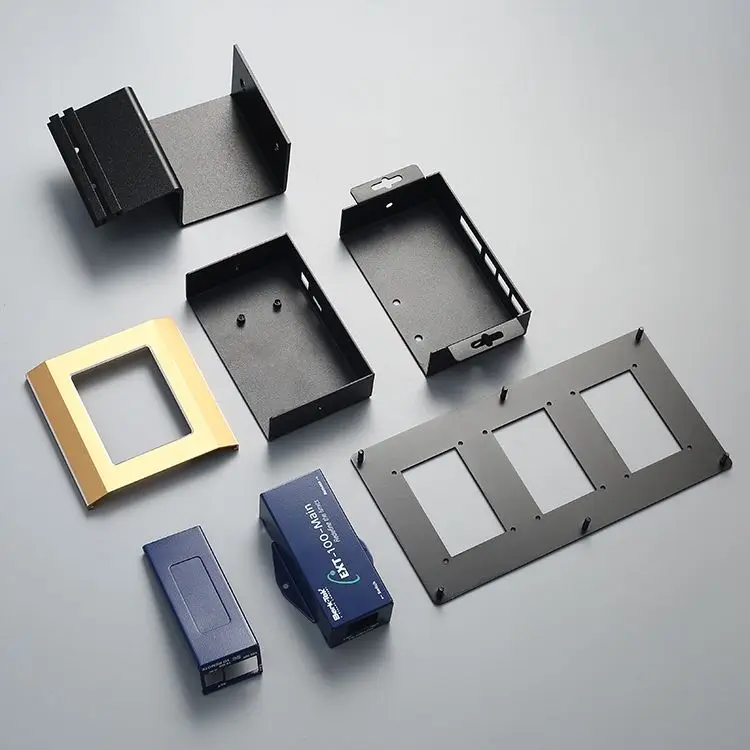
| Energy | Battery enclosures |
| Aerospace | Panels |
| Medical | Equipment casings |
Lead Time & Production Workflow
| Stage | Time |
|---|---|
| DFM Review | 1–2 days |
| Fabrication | 3–7 days |
| Finishing | 2–5 days |
| Shipping | 3–7 days |
Q: How long does production take?
Typically 7–14 days depending on complexity.
Why Choose KaiSpeed?
At KaiSpeed, we go beyond manufacturing—we optimize your entire production process.
Our Advantages
- Engineering-driven DFM optimization
- Competitive pricing from China manufacturing
- Fast global delivery
- Strict quality control
👉 Start your project with our custom sheet metal fabrication services.
❓ FAQ
What is sheet metal fabrication used for?
Used for enclosures, brackets, and industrial structures across multiple industries.
What thickness is best?
Typically 0.5–6 mm depending on application.
How much does it cost?
Depends on material, complexity, and volume.
Is it good for prototyping?
Yes, especially for functional prototypes.
What finishes are available?
Powder coating, anodizing, plating, brushing.
🚀 Get Started with KaiSpeed
Looking for a reliable partner for your next project?
At KaiSpeed, we help you:
- Reduce manufacturing cost
- Improve product quality
- Accelerate time-to-market
👉 Upload your CAD files today
👉 Get DFM feedback within 24 hours
👉 Receive a fast and competitive quote