
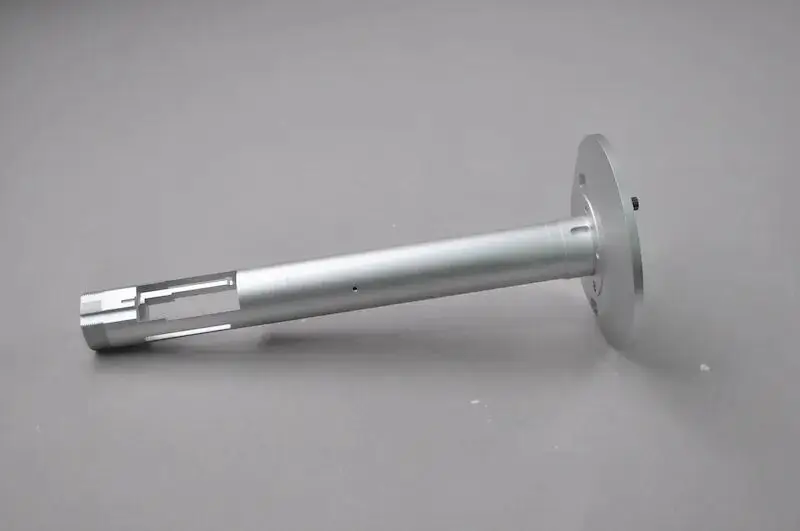
1. Overview of the Project
Modern product development cycles are becoming shorter, while engineering complexity continues to increase.
In this CNC machining case study, KaiSpeed was approached by a product development team working on a high-precision mechanical system assembly requiring:
- Tight dimensional control
- Multi-component alignment
- High surface quality
- Fast turnaround for validation testing
The client was under pressure:
- Engineering validation delay = delayed funding milestone
- Prototype failure = redesign cost increase
- Supplier lead time = 4–6 weeks
KaiSpeed was required to deliver a production-ready solution in less than 10 days.
2. Engineering Challenges
This project was not a simple CNC machining job—it involved system-level manufacturing complexity.
2.1 Geometric Complexity
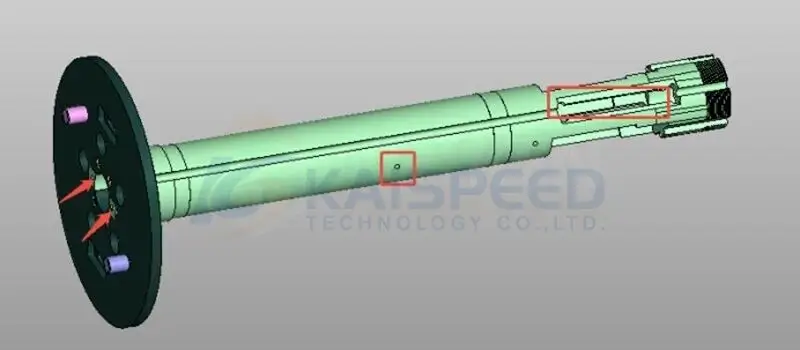
- Deep cavities
- Thin walls (<1.2 mm)
- Multiple mating interfaces
- Internal alignment structures
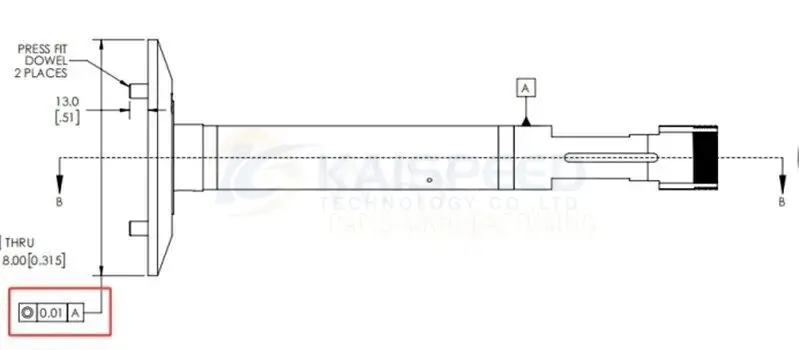
2.2 Tolerance Requirements
- Critical tolerance: ±0.01 mm
- Assembly fit requirement: zero mechanical interference
2.3 Material Constraints
- Aluminum alloy (high machinability but deformation risk)
- Stainless steel sub-components (thermal expansion challenge)
2.4 Production Risk Factors
- Distortion during machining
- Multi-step alignment errors
- Surface finish inconsistency
- Tool deflection in deep milling
3. Initial Manufacturing Risks
Most suppliers evaluated this project as:
- ❌ High risk of scrap
- ❌ Long machining cycle
- ❌ Multiple fixture changes required
- ❌ High cost due to complexity
Traditional CNC workflow would require:
- 3–5 setups per part
- Multiple manual inspections
- Separate machining operations per feature
This leads to:
👉 accumulated tolerance stack-up
👉 increased cost
👉 longer lead time
4. KaiSpeed DFM Engineering Review
Before machining started, KaiSpeed applied a DFM-first engineering workflow.
4.1 What Was Analyzed
- CAD geometry stress points
- Tool accessibility
- Wall thickness stability
- Tolerance stacking chain
- Fixture feasibility
4.2 Key Optimization Actions
✔ Simplified machining strategy
Reduced unnecessary tight tolerance zones (where functionally non-critical)
✔ Rebalanced tolerance allocation
Shifted tolerance control to functional interfaces only
✔ Improved machining accessibility
Redesigned tool paths for fewer deep reach operations
✔ Reduced number of setups
Consolidated operations into single-fixture machining strategy
5. CNC Machining Strategy
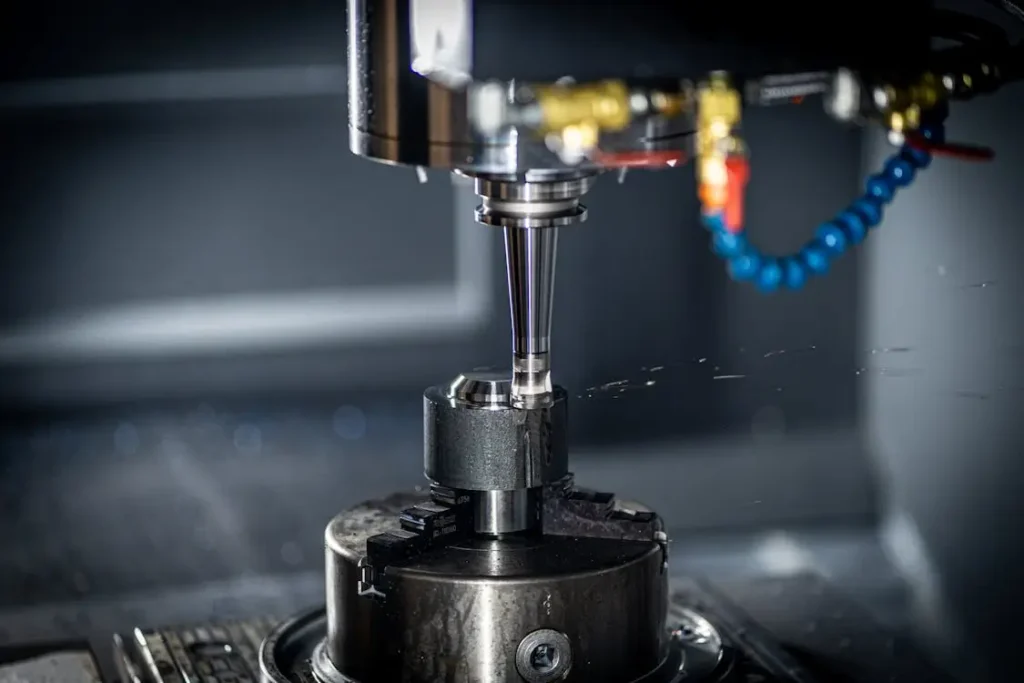
KaiSpeed implemented a hybrid 5-axis + precision CNC workflow.
5.1 Manufacturing Approach
| Process | Purpose |
|---|---|
| 5-axis CNC machining | Single setup complex geometry |
| Precision milling | Critical tolerance features |
| CNC turning | Cylindrical alignment features |
| Micro-finishing | Surface finish optimization |
5.2 Why 5-Axis Was Critical
Compared to traditional 3-axis machining:
| Factor | 3-Axis | 5-Axis |
|---|---|---|
| Setup count | 3–5 | 1 |
| Accuracy risk | Medium | Low |
| Tool accessibility | Limited | High |
| Lead time | Long | Short |
👉 Result: 40–60% cycle time reduction
6. Production Process Breakdown
Step 1: Material Preparation
- Certified material sourcing
- Pre-machining stress relief
- Dimensional pre-check
Step 2: Rough Machining
- Bulk material removal
- Thermal control strategy applied
Step 3: Semi-Finish Machining
- Feature definition
- Tolerance shaping
Step 4: Precision Finishing
- High-speed CNC finishing
- Surface refinement passes
Step 5: Assembly Fit Validation
- Dry-fit simulation
- Interference detection
7. Quality Control System
KaiSpeed implemented a multi-layer inspection system.
7.1 Inspection Tools
- CMM (Coordinate Measuring Machine)
- Optical measurement system
- Digital micrometers
- Surface roughness tester
7.2 Quality Workflow
| Stage | Inspection Type |
|---|---|
| In-process | Tool probing |
| Mid-process | Dimensional verification |
| Final | Full CMM report |
7.3 Statistical Control
- SPC monitoring
- Batch consistency tracking
- Real-time deviation correction
8. Results & Performance Comparison
8.1 Final Outcome
- Delivered in: 7 days
- Target lead time: 30–40 days
- Reduction: ~5× faster
8.2 Performance Table
| Metric | Traditional Supplier | KaiSpeed |
|---|---|---|
| Lead time | 30–40 days | 7 days |
| Setup count | 3–5 | 1 |
| Tolerance | ±0.01–0.05 mm | ±0.005 mm |
| Scrap rate | 5–10% | <1% |
| Engineering support | Limited | Direct engineer access |
8.3 Business Impact
- Faster prototype validation
- Reduced engineering iteration cost
- Faster product decision cycle
- Earlier market readiness
9. Engineering Lessons Learned
Lesson 1: DFM is more important than machining itself
Most cost and time savings come from design optimization—not machine speed.
Lesson 2: Setup reduction = accuracy improvement
Fewer setups reduce cumulative error.
Lesson 3: 5-axis machining is not optional for complexity
It is essential for modern precision manufacturing.
Lesson 4: Engineering communication matters
Direct engineer-to-engineer communication reduces failure risk.
10. Why Global Companies Choose KaiSpeed
KaiSpeed is not just a CNC supplier.
It is an engineering-driven manufacturing partner.
Core advantages:
✔ Engineering-first workflow
Every project starts with DFM review.
✔ High-precision capability
- ±0.005 mm machining capability
- Complex geometry production
✔ Scalable production
- Prototype → small batch → mass production
✔ Industry coverage
11. Conclusion
This CNC machining case study demonstrates a key principle:
Manufacturing speed is not achieved by machines alone, but by engineering intelligence.
By combining:
- DFM optimization
- 5-axis CNC machining
- Precision inspection systems
- Engineering-led workflow
KaiSpeed was able to compress a 30–40 day process into 7 days without compromising accuracy.
Need High-Precision CNC Machining Support?
Whether you’re developing:
- Aerospace components
- Robotics systems
- Industrial assemblies
- Medical devices
KaiSpeed can help you reduce lead time and improve manufacturability.
👉 Upload your CAD file and get engineering feedback within 24 hours